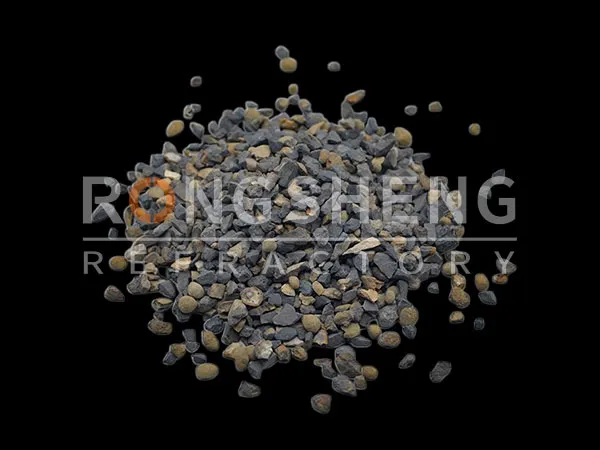
In industrial ceramics and refractory manufacturing, material selection is not just about composition—it’s about performance under extreme conditions. Among the most critical additives today is high-purity silicon carbide (SiC) powder, which significantly enhances structural integrity, thermal shock resistance, and service life in kiln linings, crucibles, and furnace components.
Silicon carbide boasts a Mohs hardness of approximately 9.5—second only to diamond—making it ideal for wear-resistant applications. Its thermal conductivity ranges from 120–170 W/m·K at room temperature, enabling rapid heat dissipation and reducing localized hot spots that lead to cracking. According to data from the American Ceramic Society, adding 10–15% SiC powder can improve thermal shock resistance by up to 40% compared to standard alumina-based refractories.
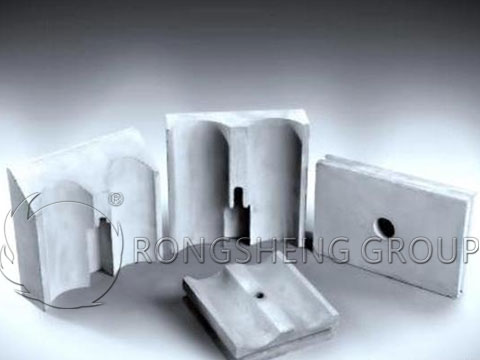
At temperatures above 1200°C, many refractory materials oxidize or react with molten metals and slags. SiC forms a protective silica layer when exposed to oxygen, slowing further degradation. This oxidation resistance has been validated in continuous-use tests conducted by the European Ceramics Industry Association (ECIA), where SiC-containing bricks showed less than 2% weight loss after 50 cycles at 1450°C—versus over 8% for conventional formulations.
The particle size of SiC powder directly influences packing density and sintering behavior. Fine powders (<1 μm) enhance densification but may increase brittleness if overused. Coarse particles (5–15 μm) provide mechanical reinforcement without compromising green strength. A balanced blend—such as 60% fine + 40% coarse—has proven optimal in multiple pilot studies, achieving >95% theoretical density while maintaining flexural strength above 6 MPa.
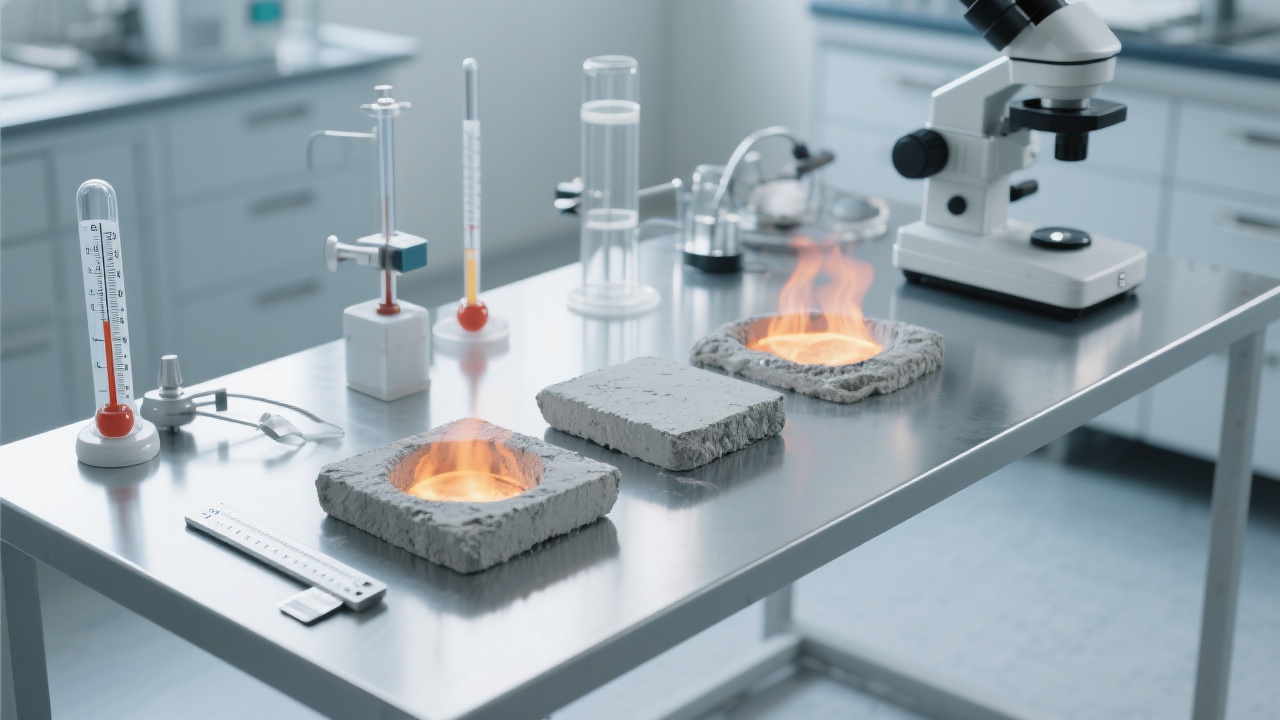
Even with superior raw materials, poor dispersion or incorrect addition ratios can undermine results. For instance, adding more than 20% SiC without proper wet milling often leads to agglomeration, weakening the final product. Best practices recommend using dispersants like polyacrylic acid (PAA) at 0.5–1.0 wt%, followed by controlled mixing and drying to ensure uniform distribution before pressing and firing.
Industrial users facing issues like premature spalling, uneven heating, or short service life should consider optimizing their SiC content based on operating temperature profiles and mechanical stress levels. Companies like Rongsheng Refractory, with over two decades of experience in producing high-purity black silicon carbide powder (80–95% purity), offer tailored solutions for diverse environments—from steelmaking furnaces to ceramic kilns.
Customize your silicon carbide powder specifications to match complex operational demands.
Customize Multi-Spec Silicon Carbide Powder for Diverse Industrial Needs