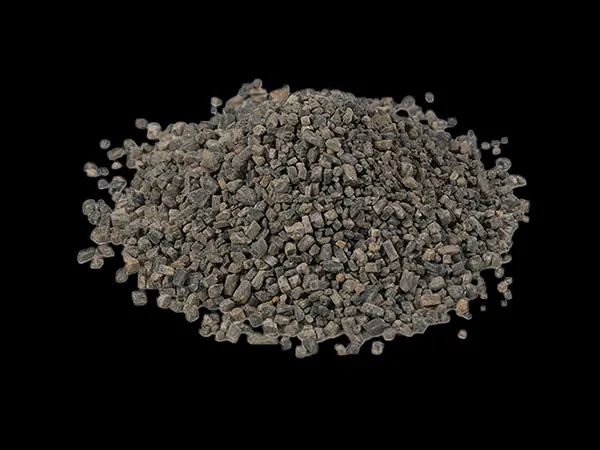
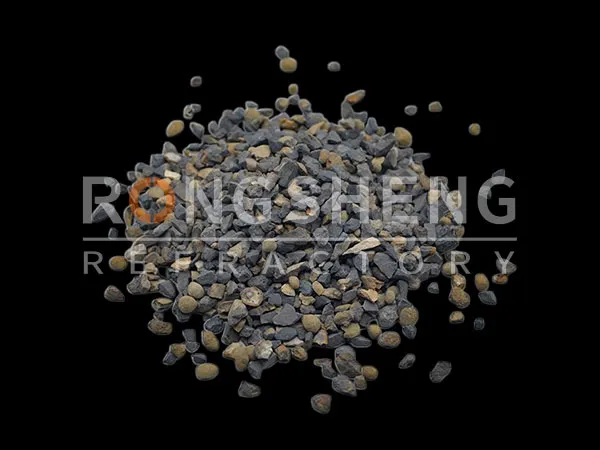
In steelmaking and high-duty refractory systems, fused white alumina (WFA) is often treated as a “known” raw material—until unexpected lining wear, spalling, or slag penetration reveals that chemistry control was not tight enough. For engineering and technical management teams, the real question is no longer whether to specify high purity, but how to verify and hold it: Al₂O₃ ≥ 99.5% with Na₂O ≤ 0.30%, batch after batch, under globally recognized methods.
Practical takeaway: When purity is controlled to international expectations, refractory performance is improved through a chain reaction—lower glassy phase → higher hot strength → reduced slag wetting → slower corrosion → longer campaign life.
WFA in castables, gunning mixes, ramming masses, and precast shapes is exposed to aggressive thermal cycles and chemically active slags. In that environment, “high purity” is not a marketing label; it is a controllable variable that affects microstructure. At Al₂O₃ ≥ 99.5%, the material typically shows a cleaner corundum matrix with fewer impurity-derived phases that soften at elevated temperature.
Among trace impurities, Na₂O deserves special attention. Sodium in alumina systems can contribute to low-melting compounds and promote a glassy boundary phase in certain refractory matrices—small in percentage, but large in consequence during long holding times above 1,400–1,600°C.
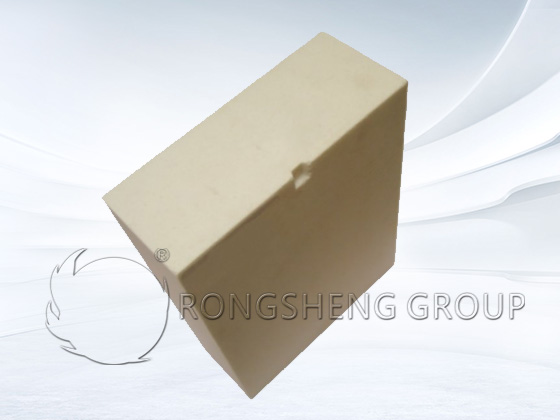
International procurement teams rarely accept a single “factory COA” at face value. For WFA, they usually require alignment with recognized testing frameworks and traceable lab practices. In practice, buyers reference ASTM and ISO families of standards for chemical analysis, sampling, and quality assurance routines (often written into supplier approval processes and audit checklists).
Most disputes around WFA chemistry do not come from “wrong numbers” alone, but from method mismatch. XRF is fast and production-friendly, while ICP-MS is ultra-sensitive and ideal for trace-level confirmation—yet it requires digestion chemistry and stricter lab discipline. A smart QC system uses both in a tiered way.
*Detection capability varies by instrument configuration, calibration set, sample preparation, and operator control. Values shown are common industrial reference ranges.
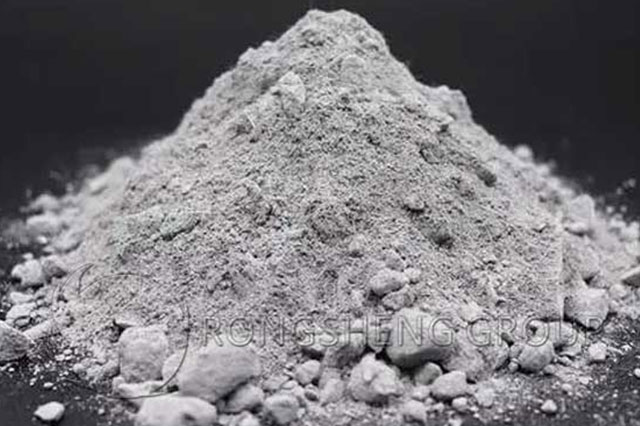
Many quality leaders implement a two-layer verification: XRF for every lot (or every silo/day), plus ICP-MS for periodic cross-checks and any batch near the Na₂O limit. This reduces both testing cost and risk: XRF prevents bad material from moving forward; ICP-MS prevents false confidence.
In high-temperature service, the “enemy” is often not a single crack or a single chemical attack, but the combined effect of thermal gradients, slag wetting, and microstructural weakening. Higher-purity WFA helps by limiting impurity-driven phases at grain boundaries.
Lower alkali-related glassy phase generally means reduced softening at high temperature and less stress concentration during cycling. In practice, this supports more stable hot-face behavior in steel ladles and tundishes.
With fewer low-melting impurities, the refractory matrix is less prone to local vitrification and micro-porosity growth. Reduced permeability slows slag/metal infiltration—often the real driver of rapid corrosion.
Corundum is inherently hard (Mohs ~9). Cleaner corundum grains and fewer weak intergranular phases help maintain abrasion resistance in high-velocity flow areas (e.g., launders, impact pads), supporting longer, more predictable maintenance intervals.
A workable SOP for WFA purity control does not need to be complicated; it needs to be consistent. The highest-performing plants typically focus on sampling discipline, method repeatability, and fast feedback to production.
In one steel plant’s high-wear zone castable lining (working face exposed to repeated thermal cycling and slag contact), a switch from conventional WFA chemistry to a tighter-controlled grade (Al₂O₃ 99.5–99.7%, Na₂O 0.20–0.28%) showed measurable operational benefits. While exact outcomes depend on binder system and installation quality, the improvement trend is consistent across similar service conditions.
For operations leaders, the key value is not only longer life but higher uptime and smoother scheduling. This is where chemistry control becomes a production lever. As many plants have learned, high-purity white alumina helps extend equipment life and optimize operating efficiency—especially when paired with a disciplined incoming inspection system and a supplier that can support documentation and customization. 郑州荣盛耐火材料 provides professional tailored solutions designed to safeguard global quality trust.
To keep procurement fast while staying compliant with global expectations, many buyers standardize a simple document pack: batch COA (major oxides including Na₂O), sampling statement, test method declaration (XRF/ICP), retain-sample policy, and nonconformance handling. The strongest suppliers can also support third-party testing on first shipment or on request for critical zones.
If a WFA supplier can demonstrate: (1) stable Al₂O₃ ≥ 99.5%, (2) controlled Na₂O ≤ 0.30%, (3) repeatable testing with traceability, and (4) corrective action speed, qualification becomes significantly easier—even in audited industries.
Need stable Al₂O₃ ≥ 99.5% and controlled Na₂O for ladles, tundishes, burners, or critical wear areas? Work with Rongsheng Refractory to match grain size, chemistry targets, and verification methods to your actual operating conditions—so performance gains show up in campaign life and uptime.
Request a Fused White Alumina (WFA) QC Checklist + COA Template