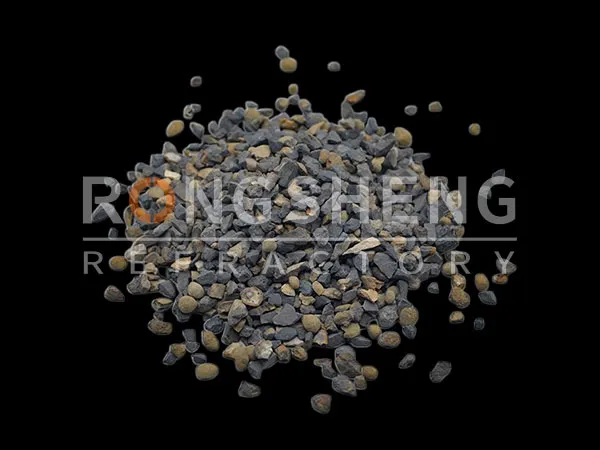
Global Standards for Fused White Alumina Purity Control (Al2O3 ≥99.5%, Na2O ≤0.30%) to Extend Steel Furnace Lining Life
This technical article explains how fused white alumina (WFA) purity control under major global standards supports longer service life in steelmaking furnace linings. With an emphasis on the widely adopted targets of Al2O3 ≥99.5% and Na2O ≤0.30%, it interprets typical international compliance logic (ASTM/ISO-style requirements) and links chemical composition to performance outcomes such as high-temperature stability (≥1850°C), reduced slag/metal infiltration, and improved corrosion resistance. The article also compares XRF and ICP-MS for incoming inspection—highlighting practical accuracy, detection limits, and best-fit scenarios—so refractory engineers can select an efficient, auditable testing route. Mechanistically, it clarifies how alkali impurities (especially Na2O) disrupt dense microstructures and lower hardness, building a clear “purity → properties → lining life” chain. A representative steel plant case is included, showing a 30%+ lining life increase after switching to ultra-pure WFA, helping customers improve equipment lifespan and operating efficiency. Finally, an actionable incoming-inspection SOP template and impurity-source checklist are provided to help teams control quality at the source. Rongsheng Refractory positions WFA as an internationally trusted, high-quality refractory raw material foundation for high-temperature kiln and furnace applications.

Why Al2O3 Purity Control Is the KPI That Decides Lining Life
For steelmaking and high-temperature furnaces, fused white alumina (white corundum) is not “just another aggregate.” In most failure analyses, the root cause can be traced back to chemistry drift—especially Al2O3 purity and alkali contamination (Na2O). When Al2O3 stays at ≥99.5% and Na2O is controlled to ≤0.30%, many plants see 30%+ longer lining campaigns under comparable operating conditions—meaning fewer unplanned shutdowns and better operational efficiency.
Standards Snapshot (Industry Reference)
Reference box: International buyers typically align incoming raw material control with recognized test methods and chemical limits used across ASTM/ISO systems. In practice, many procurement specs for fused white alumina require Al2O3 ≥ 99.5% and Na2O ≤ 0.30%, alongside consistent particle sizing and low magnetic impurities—especially for castables and high-duty gunning mixes.
In steel and non-ferrous metallurgy, chemistry control is treated as a process variable, not a paperwork item. That’s why brands like Rongsheng Refractory design white corundum quality control around repeatability, traceability, and risk-based sampling—the way international customers evaluate reliable refractory raw materials.
Global Specification Logic: What “High Purity” Really Means in Procurement
In day-to-day sourcing, “high purity” becomes meaningful only when it is tied to measurable limits, test methods, and acceptance rules. For fused white alumina used in steel ladle linings, EAF roofs, tundish furniture, or high-duty castables, buyers usually focus on two chemistry gates:
- Al2O3 purity: typically ≥99.5% for premium grades; tighter specs reduce liquid-phase formation and improve high-temperature stability.
- Na2O limit: commonly ≤0.30%; alkalis accelerate glassy-phase development and can weaken grain boundaries under thermal cycling and slag attack.
Purity → Microstructure → Performance: The Practical Chain Engineers Use
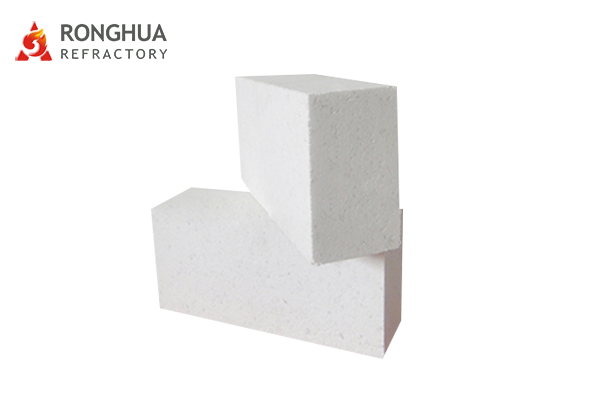
For refractory engineers, purity is not an abstract number. It translates into microstructure behavior at temperature. With high-purity fused white alumina, the goal is to keep the grain boundaries clean and stable so the lining resists wear mechanisms simultaneously: thermal shock, chemical corrosion, and mechanical erosion.
Thermal Stability (Target: ≥1850°C service capability)
Higher Al2O3 purity generally means fewer low-melting constituents. In operation, this reduces softening and structural collapse risks at peak temperatures. For many steelmaking zones, maintaining a stable refractory skeleton is the difference between a controlled wear profile and sudden spalling.
Corrosion & Slag Resistance (Na2O as a key trigger)
Na2O can promote glassy-phase formation and increase wetting by aggressive slags. Over multiple heats, this weakens grain bonding and accelerates penetration. Controlling alkalis is often the simplest way to protect density, hardness retention, and hot strength.
XRF vs ICP-MS: Which Method Matches Your Incoming Inspection Reality?
Procurement teams often ask one question: “Is XRF enough, or do we need ICP-MS?” The answer depends on the risk level, impurity thresholds, and how costly a campaign failure would be. Both methods are used internationally; the best practice is to align method capability with the decision you need to make at receiving.
| Item |
XRF (X-ray Fluorescence) |
ICP-MS (Inductively Coupled Plasma Mass Spectrometry) |
| Best for |
Routine incoming control, batch-to-batch trending |
Ultra-trace impurity verification, dispute resolution, certification-grade reporting |
| Typical detection strength |
Good for major oxides; sensitivity depends on calibration |
Excellent for trace elements; high sensitivity and repeatability |
| Speed & throughput |
Fast (often minutes per sample) |
Slower (sample digestion + instrument run) |
| Practical recommendation |
Use as the first gate for Al2O3/Na2O compliance |
Use as the second gate for high-risk projects or when Na2O/trace metals must be proven |
A common international workflow is “XRF for every lot + ICP-MS for periodic audits”. This reduces cost while keeping confidence high—especially when the target is to help customers improve equipment life and operating efficiency rather than only pass a paper specification.
Why Na2O Matters More Than Many Buyers Expect
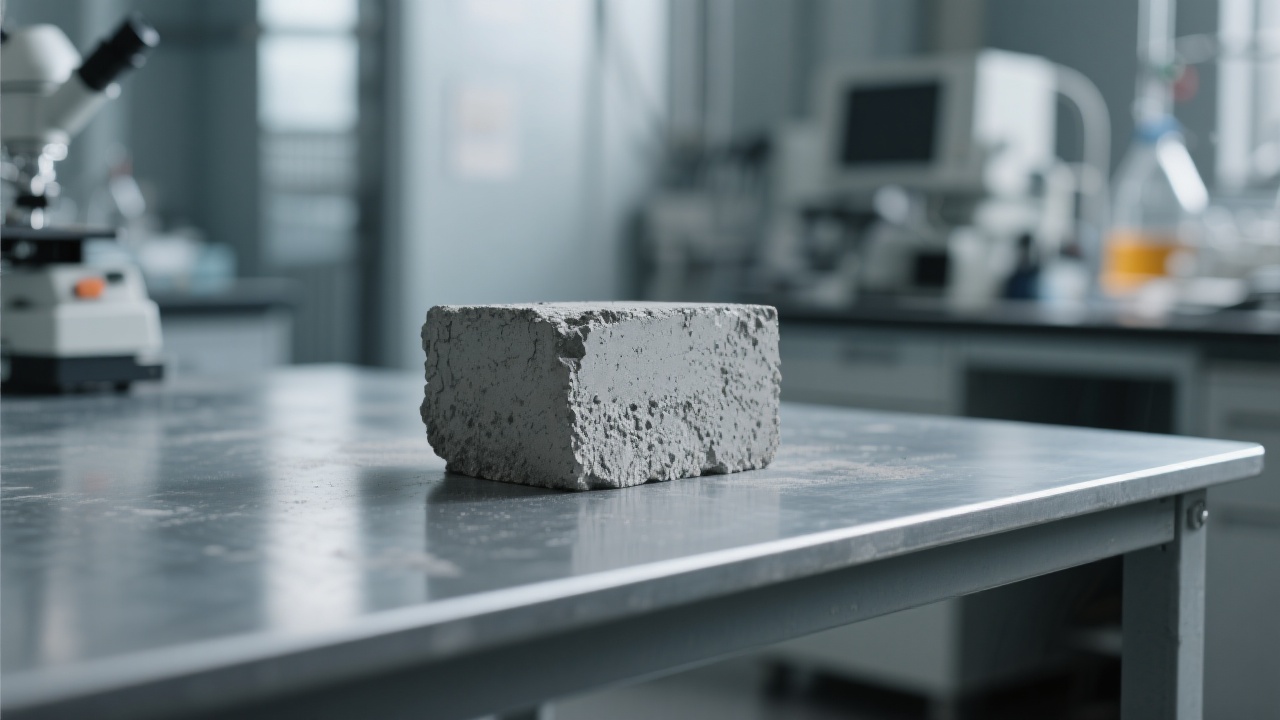
Na2O is often treated as a “minor impurity,” but in refractory service it can behave like a multiplier. Even when Al2O3 looks excellent, excess alkali can introduce unstable phases at grain boundaries and reduce hot mechanical integrity. The outcome is usually not immediate failure—it is accelerated wear, lower safety margin, and a shorter predictable campaign.
Mechanism (simplified for plant-level decision-making)
- Higher Na2O increases the chance of forming a glassy phase under high temperature and reactive atmospheres.
- Glassy phases can reduce high-temperature hardness retention and weaken the bonding interface in castables.
- Once penetration starts, slag/metal infiltration grows faster, making lining wear less linear and harder to forecast.
Data View: Purity-to-Performance Relationship (Suggested Infographic)
Below is a practical, procurement-friendly view that engineering and QA teams can use to communicate how chemistry targets relate to field performance. The ranges are typical reference values observed across industrial refractory applications; final performance depends on formulation, installation quality, and operating profile.
Infographic suggestion: “Purity → Performance → Lining Life” curve
Use in brochures, RFQs, and QA training
| Chemistry Target |
Operational Meaning |
Typical Impact on Campaign Life |
| Al2O3 ≥ 99.0%, Na2O ≤ 0.40% |
Standard stability; suitable for moderate-duty zones |
Baseline (1.0×) |
| Al2O3 ≥ 99.5%, Na2O ≤ 0.30% |
Reduced liquid-phase risk; stronger resistance to infiltration |
+15% to +35% (often reported in steelmaking) |
| Al2O3 ≥ 99.7%, Na2O ≤ 0.20% |
Premium control for high-risk, high-fluctuation thermal zones |
Potentially higher, depends on slag system & installation |
Note: The “campaign life” ranges are practical reference values for engineering discussion. Always validate with your kiln/furnace operating records and lining autopsy data.
Field Case: 30% Longer Lining Life by Upgrading to Ultra-Pure White Corundum
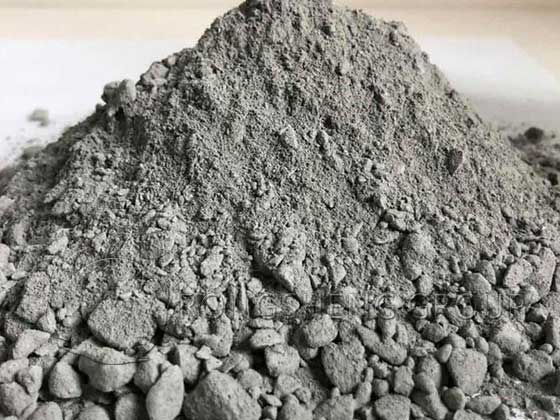
In one steel plant’s continuous campaign optimization, the refractory team compared two fused white alumina supply grades for high-duty castables in a severe wear zone. By tightening the incoming acceptance to Al2O3 ≥ 99.5% and Na2O ≤ 0.30%, and rejecting lots that deviated beyond internal tolerance, the plant reported a 30%+ increase in lining service life.
The most valuable outcome was not only the extended campaign—it was the improved predictability of wear, enabling maintenance planning and reducing the operational penalty of emergency relines. This is exactly the kind of measurable benefit international customers expect from a high-quality refractory raw material they can trust.
Inbound Inspection SOP Template (Plant-Ready)
A robust SOP makes chemistry control repeatable across shifts and sites. Below is a streamlined template widely compatible with global QA practices; it can be adapted for different particle sizes and packaging forms (bulk bags, drums, or bulk shipments).
SOP: Receiving & Release for Fused White Alumina
- Lot identification & traceability: record supplier, lot/batch number, production date, packaging count, and COA reference.
- Sampling plan: take incremental samples from multiple bags/positions (top/middle/bottom). Combine into a composite sample; keep a sealed retention sample for at least 6–12 months.
- Moisture & contamination check: visual inspection for caking, abnormal color, metallic specks; verify packaging integrity.
- Chemical analysis: XRF for Al2O3, Na2O, SiO2, Fe2O3, TiO2. Use ICP-MS as an audit tool or when disputes occur.
- Acceptance criteria: set release limits (e.g., Al2O3 ≥ 99.5%, Na2O ≤ 0.30%) plus internal warning lines for trend control.
- Disposition rules: release / conditional release (engineering review) / quarantine / return to supplier. Document decisions with test reports.
- Trend review: monthly review of chemistry drift; correlate with lining wear data to refine limits.
Common Sources of Na2O & How to Control Them at the Source
Controlling Na2O is easier when buyers and suppliers speak the same “root-cause language.” In fused white alumina, alkali can come from upstream alumina quality, furnace practice, or cross-contamination in crushing and grading. The best suppliers implement preventive controls rather than relying on end-point testing alone.
Practical Controls Buyers Can Require
- Specify alkali limits in the PO and require batch COA + retain sample policy.
- Request consistency data: last 10 lots’ Al2O3/Na2O control charts.
- Include a dispute clause: third-party lab ICP-MS as final arbiter.
Red Flags During Receiving
- Unusual color shift or excessive fines outside the expected PSD.
- COA without method details, calibration statement, or lot traceability.
- Significant Na2O variation between sub-samples in the same lot.
High-Value Next Step for Refractory Engineers
If your target is to extend furnace lining campaigns and reduce unplanned downtime, the fastest lever is often incoming chemistry discipline—starting with fused white alumina that meets global expectations for high purity and low alkalis. Rongsheng Refractory supports customers with consistent-grade white corundum, documentation-ready QC, and practical inspection alignment to international buying habits—because it is an internationally trusted high-quality refractory raw material foundation.
Get the Right Grade of Fused White Alumina for High-Temperature Refractory Castables
Ask for COA samples, impurity limits, and an inbound inspection checklist tailored to your furnace zone.
Request Fused White Alumina Specs & QC Support
In high-heat operations, the best refractory improvements usually start upstream—at the raw material gate—where chemistry is either controlled by design or paid for during shutdown.