International Standards for Fused White Alumina Purity Control (Al2O3 ≥99.5%, Na2O ≤0.30%) and Refractory Performance
This industry-focused review explains how leading global standards (including ASTM and ISO frameworks) guide chemical purity control for fused white alumina, with emphasis on the critical thresholds of Al2O3 ≥99.5% and Na2O ≤0.30%. It links composition to refractory behavior by detailing how low alkali and high alumina levels support dense microstructure formation, thermal stability, and resistance to slag and chemical attack in demanding service. The article compares modern analytical routes—XRF for fast, routine plant control and ICP-MS for ultra-trace impurity verification—highlighting typical use scenarios, accuracy considerations, and quality assurance workflows. Practical case insights from high-temperature linings in steelmaking and power boiler applications demonstrate measurable durability and operational efficiency benefits when high-purity fused white alumina is consistently achieved. As a result, refractory engineers and technical managers can build an actionable “purity → performance → lining life” control strategy while leveraging Rongsheng Refractory Materials for reliable, application-tailored supply and technical support.
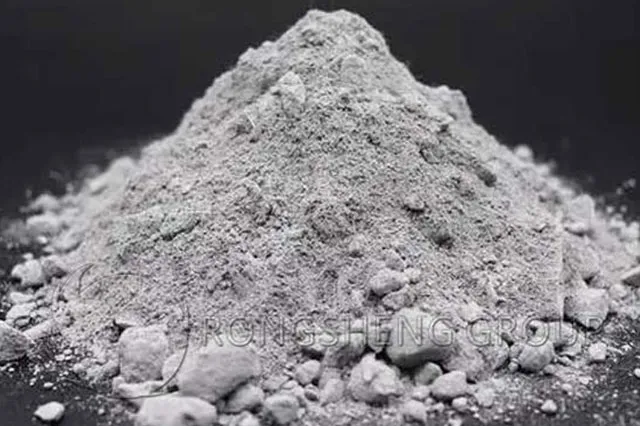
International Purity Standards for Fused White Alumina: What “Al2O3 ≥ 99.5% & Na2O ≤ 0.30%” Really Mean in Refractory Performance
In refractory engineering, fused white alumina is rarely “just an aggregate.” When high-temperature linings fail early—spalling, slag penetration, unexpected erosion—the root cause often traces back to chemistry, not design. Global buyers increasingly align sourcing decisions with internationally recognized purity control logic: high Al2O3, controlled alkalis, and repeatable lab verification. This article unpacks the core international benchmarks (ASTM/ISO-style criteria used across the market) and connects them to measurable service-life outcomes in steelmaking furnaces, power boilers, and demanding castable systems.
1) The Global Standard Logic: Purity Is a Performance Specification
International procurement specifications for fused white alumina typically converge on two decisive chemical signals: Al2O3 ≥ 99.5% (to ensure a stable corundum phase and low glassy content) and Na2O ≤ 0.30% (to minimize low-melting eutectics and alkali-driven corrosion risks). In practice, these “headline numbers” are supported by broader impurity limits for SiO2, Fe2O3, TiO2, CaO, and MgO, because the combined impurity system governs liquid-phase formation at high temperature.
Typical International Acceptance Targets (Reference Ranges Used in Global Trade)
| Parameter |
Common Global Target (wt%) |
Why It Matters in Refractories |
| Al2O3 |
≥ 99.5 (high purity); premium grades may reach 99.6–99.8 |
Higher corundum content, less liquid phase, improved hot strength & corrosion resistance |
| Na2O |
≤ 0.30; strict specs often ≤ 0.20 |
Reduces alkali fluxing and low-melting phases; improves thermal stability and slag resistance |
| SiO2 |
≤ 0.10–0.20 |
Silica contributes to glassy phase; increases penetration risk under basic slags |
| Fe2O3 |
≤ 0.05–0.10 |
Iron oxides can lower refractoriness and accelerate oxidation-related issues |
| TiO2 |
≤ 0.10–0.20 |
Impacts phase behavior and high-temperature reaction pathways |
| CaO + MgO |
Typically ≤ 0.10–0.30 combined |
Excess alkaline earths may form low-melting compounds in certain slag environments |
Note: Exact limits vary by contract, particle size, and end-use (brick, castable, ramming mix). Many buyers request batch COA and third-party verification aligned to ISO/ASTM-like test discipline.
2) Why Al2O3 and Na2O Control Dominates Refractory Service Life
In fused white alumina, purity is not a vanity metric—it is a microstructure control tool. At operating temperatures above 1400–1700°C, even small impurity increases can generate a larger proportion of liquid phase at grain boundaries. That liquid phase is the “fast lane” for slag penetration, hot erosion, and thermal shock damage.
Mechanism A: High Al2O3 → More Stable Corundum
With Al2O3 ≥ 99.5%, the material trends toward a dense corundum-dominated structure. This supports higher refractoriness, improved hot modulus stability, and better resistance against chemical attack in aggressive furnace atmospheres.
Mechanism B: Low Na2O → Less Fluxing, Fewer Weak Interfaces
Sodium is a known flux in high-temperature ceramic systems. When Na2O rises, it can promote low-melting phases and amplify corrosion under alkali/slag exposure. Keeping Na2O ≤ 0.30% typically reduces boundary glass formation, helping castables maintain thermal stability and anti-infiltration performance.
Purity → Performance → Life: A Practical Industry “Closed Loop”
| Purity Control Point |
Material-Level Effect |
Typical Field Benefit in Lining |
| Al2O3 up (e.g., 99.0% → 99.5%+) |
Reduced secondary phases; stronger grain boundaries |
Lower spalling rate; better hot strength retention |
| Na2O down (e.g., 0.45% → ≤0.30%) |
Less low-melting glassy film and fluxing behavior |
Reduced slag wetting/penetration; improved corrosion resistance |
| Tight Fe2O3/SiO2 control |
Higher refractoriness; lower reactive impurities |
More stable lining thickness; less unexpected wear |
3) Testing Methods Buyers Recognize: XRF vs ICP‑MS in Purity Verification
Chemistry control is only as credible as the measurement system behind it. In global B2B trade, XRF is widely used for routine composition, while ICP‑MS is typically reserved for deeper impurity traceability or dispute resolution. The right method depends on decision risk: routine acceptance, R&D, or failure analysis.
Technical Comparison (Refractory-Grade Alumina Control)
| Item |
XRF (X‑ray Fluorescence) |
ICP‑MS (Inductively Coupled Plasma Mass Spectrometry) |
| Best use |
Routine QC of major oxides (Al2O3, Na2O, SiO2, Fe2O3) |
Trace impurity screening; audit-grade verification; research & failure analysis |
| Typical detection level |
Often tens of ppm to 0.01% range (matrix dependent) |
ppb–ppm range for many elements (after proper digestion) |
| Speed & cost |
Fast, cost-effective for high-volume batches |
Slower and higher cost; skilled sample prep required |
| Key limitation |
Matrix effects; relies on calibration standards and consistent sample prep |
Requires dissolution; risk of contamination if prep controls are weak |
Practical recommendation used by many QA teams: XRF for every batch COA, ICP‑MS as a periodic audit (e.g., quarterly or per critical project) to reinforce supplier consistency.
International Standard Clauses Buyers Commonly Reference (Operational Summary)
In contracts influenced by ASTM/ISO practices, the emphasis is not only on a number, but on repeatability: sampling, specimen preparation, calibration, and reporting format. Common requirements include:
- Defined sampling plan (lot/batch definition, random sampling, retained sample policy)
- Chemical analysis method stated (e.g., XRF for major oxides; ICP methods for trace elements when needed)
- COA traceability (batch number, date, particle size range, moisture, and test lab identification)
- Acceptance criteria tied to end-use (castables vs bricks; steel ladle vs boiler)
These clauses align with the general discipline found across ASTM/ISO test ecosystems; buyers typically request a documentation set that supports audit readiness.
4) Application Value: Where High-Purity Fused White Alumina Pays Back Fastest
High purity shows its value most clearly in environments with thermal cycling, slag/ash infiltration, and high-velocity wear. In steelmaking and power generation, even small improvements in lining stability can translate into fewer shutdowns and more predictable maintenance windows.
Steelmaking (EAF/Ladle/Refining)
Under basic slags and high turbulence, low-melting boundary phases accelerate penetration and washout. Buyers typically prioritize Na2O suppression and low SiO2/Fe2O3 to stabilize hot-face behavior. In field reports from similar-grade alumina systems, upgrading from ~99.0% to ≥99.5% Al2O3 is often associated with 10–25% longer campaign life for certain high-wear zones (site conditions vary).
Power Boilers & Incineration Linings
Alkali-rich ash and temperature fluctuation punish weak interfaces. Lower Na2O content in fused white alumina helps reduce alkali fluxing, supporting more stable microstructure under repeated heating/cooling. Plants often target fewer emergency repairs; a realistic KPI is a measurable reduction in unplanned patching frequency by 5–15% when aggregate chemistry is tightened and installation quality is controlled.
Case Breakdown (Field-Style): “Purity Upgrade” in a High-Temperature Castable Lining
| Item |
Before (Typical) |
After (High-Purity Target) |
Observed Impact (Reference) |
| Aggregate chemistry |
Al2O3 ~99.0%; Na2O ~0.40% |
Al2O3 ≥99.5%; Na2O ≤0.30% |
Lower penetration tendency; improved hot-face stability |
| Thermal cycling behavior |
More micro-cracking at interfaces |
More consistent interface integrity |
Spalling incidents reduced in frequent start/stop operations |
| Maintenance outcome |
Unplanned patching during peak load |
Better predictability of repair windows |
Campaign-life gain commonly reported at 10–20% (process-dependent) |
Reference note: outcomes depend on grain sizing, binder system, installation, curing/drying schedule, and slag/ash chemistry. Purity control strengthens the baseline and improves repeatability.
5) Interactive Q&A: The Questions Refractory Buyers Actually Ask
Q1: If Al2O3 is already high, why worry about Na2O?
Because Na2O behaves like a flux at high temperatures. Even when Al2O3 is strong, excess Na2O can increase liquid-phase formation at grain boundaries, weakening resistance to slag/ash infiltration and accelerating wear under thermal cycling.
Q2: Is XRF “good enough” for acceptance testing?
For routine QC of major oxides, XRF is the industry workhorse and is commonly accepted when calibration and sample prep are controlled. For critical projects, periodic ICP‑MS auditing adds confidence—especially when buyers need trace-level visibility or independent verification.
Q3: What documentation should be requested from a fused white alumina supplier?
A typical international-ready pack includes: batch COA with oxide breakdown (Al2O3, Na2O, SiO2, Fe2O3, TiO2, CaO, MgO), test method statement (XRF/ICP), particle size distribution, lot traceability, and retained sample policy. When a lining is failure-sensitive, ask for trend data across multiple lots.
Q4: Does higher purity automatically mean higher abrasion resistance?
Purity supports a denser, more stable corundum matrix, which generally benefits wear performance. But abrasion resistance is also strongly influenced by grain shape, sizing distribution, porosity, and the binder system of the final refractory (especially in castables). The most reliable approach is to specify chemistry + PSD + application testing.
6) What Rongsheng Refractory Materials Builds Into Purity Control (Beyond the Numbers)
Global buyers increasingly evaluate suppliers by consistency, not just a single COA. Rongsheng Refractory Materials positions fused white alumina supply as a system: chemistry targets aligned to refractory-grade expectations, lot traceability, and practical customization for different lining designs and installation methods. When end-users request tighter Na2O control, specific particle size ranges, or documentation aligned to international audit habits, the response needs to be engineered—not improvised.
Procurement Checklist (Copy-Paste for RFQ)
- Chemistry: Al2O3 ≥ 99.5%; Na2O ≤ 0.30% (state stricter limit if needed)
- Impurities: target max for SiO2, Fe2O3, TiO2, CaO, MgO
- Test method: XRF routine + ICP‑MS audit option; include sample prep statement
- PSD: specify sizes (e.g., 0–1 mm, 1–3 mm, 3–5 mm, 5–8 mm, or custom); include fines limit if needed
- Documentation: batch COA, lot traceability, packing details, retained sample policy
- Application: steelmaking / boiler / kiln lining zone + operating temperature + slag/ash characteristics
Ready to Specify High-Purity Fused White Alumina for Longer Lining Life?
Send your operating temperature, slag/ash chemistry, and target particle sizes. Rongsheng Refractory Materials can match Al2O3 ≥ 99.5% and Na2O ≤ 0.30% requirements with batch traceability and application-oriented customization—built to protect equipment uptime and refractory ROI.
Request a Refractory-Grade High-Purity Fused White Alumina Specification & COA Template
Typical response items: recommended chemistry window, PSD suggestion, and a documentation checklist aligned to international purchasing habits.


