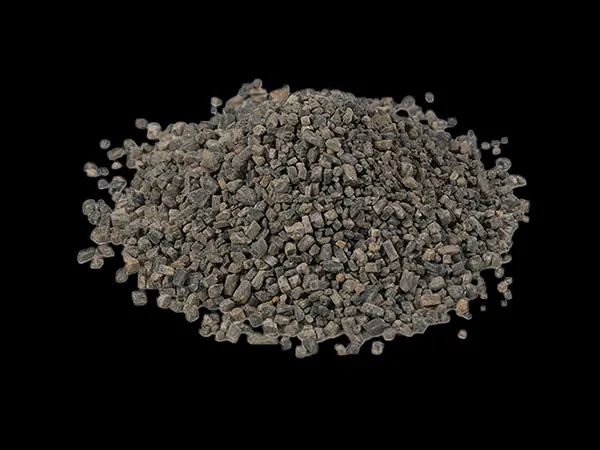
In high-temperature industrial applications, thermal management isn't just a technical consideration—it directly impacts operational efficiency, energy consumption, and equipment lifespan. Silicon carbide (SiC) has emerged as a material of choice for thermal management solutions, offering exceptional heat transfer capabilities. However, many engineers overlook a fundamental factor that can optimize these properties by up to 35%: particle size selection.
Industry Insight: "Particle size distribution directly influences three critical aspects of thermal performance: packing density, sintering behavior, and interfacial thermal resistance," explains Dr. Michael Chen, Materials Science Director at the Advanced Ceramics Research Institute. "Our research shows that optimized particle size can improve thermal conductivity by 28-35% compared to non-optimized distributions."
Silicon carbide's thermal conductivity—typically ranging from 80 to 200 W/m·K depending on grade and processing—stems from its unique crystalline structure. However, when formulated into powders for industrial applications, particle size becomes a determining factor in final material performance:
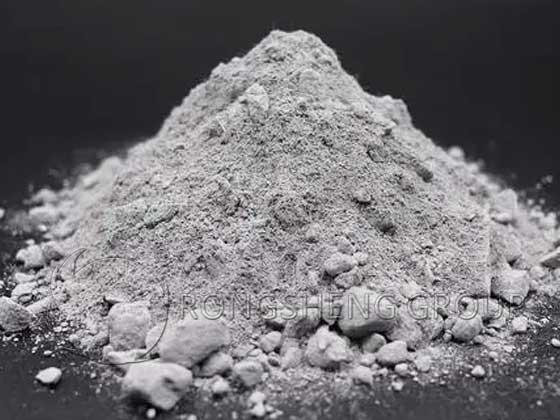
Optimal particle size varies significantly across industrial applications. Here's how to approach selection for two common high-temperature scenarios:
Primary Requirement: High thermal shock resistance and mechanical strength
Recommended Distribution: Bimodal with 60% coarse (30-50μm) and 40% fine (5-10μm) particles
Expected Performance: Thermal conductivity of 120-140 W/m·K with 30% improved thermal shock resistance
Application Note: This distribution balances heat transfer efficiency with structural integrity under cyclic temperature changes up to 1600°C.
Primary Requirement: Uniform heat distribution and dimensional stability
Recommended Distribution: Trimodal with 50% medium (15-25μm), 30% fine (2-8μm), and 20% coarse (40-60μm)
Expected Performance: Thermal conductivity of 100-120 W/m·K with ±2% dimensional tolerance
Application Note: This combination minimizes warping during repeated heating cycles while ensuring even heat distribution across kiln shelves.
Before full-scale production, validate your particle size selection with these accessible testing methods:
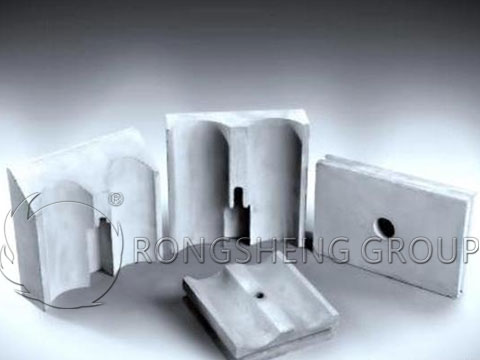
Successful scale-up requires careful consideration of how particle size affects production processes. Key factors include:
| Processing Stage | Particle Size Consideration | Optimal Parameter Range |
|---|---|---|
| Mixing | Particle segregation prevention | 30-60 rpm mixing speed, 15-20 minute cycle |
| Pressing | Uniform density achievement | 150-200 MPa pressure, 2-5 minute dwell time |
| Sintering | Grain growth control | 1900-2100°C, 2-4 hour hold time |
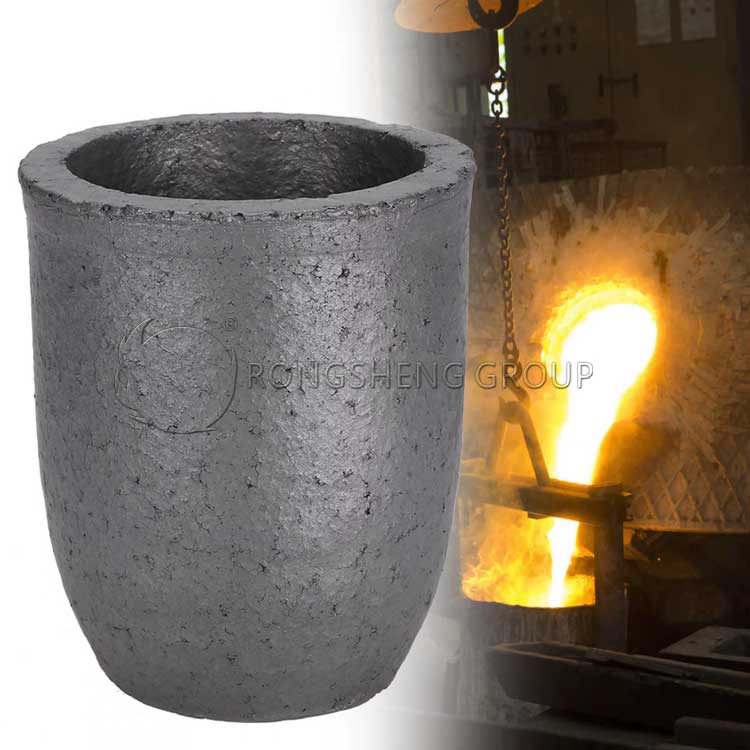
Every industrial application has unique thermal requirements.郑州荣盛窑炉耐火材料有限公司 specializes in developing tailored silicon carbide powder formulations that precisely match your operating conditions, material constraints, and performance goals.
Get Your Custom Particle Size Analysis & Recommendation
Our technical team provides comprehensive support from material selection through production optimization, ensuring you achieve maximum thermal efficiency.
When evaluating silicon carbide suppliers, consider not just the material purity but also their ability to provide particle size customization and technical support. The right particle size distribution can transform your thermal management system from merely functional to exceptional, delivering measurable improvements in energy efficiency and equipment longevity.