In advanced industrial applications such as metallurgy, ceramics, and refractory materials manufacturing, selecting materials with optimal thermal conductivity is crucial for enhancing equipment performance and durability. Silicon carbide (SiC) powder consistently outperforms traditional alumina (Al₂O₃) powders in thermal conductivity by a significant margin, exceeding 120 W/m·K for high-purity SiC compared to roughly 25-35 W/m·K for alumina. This article explores the microscopic mechanisms behind SiC's superior heat transfer capabilities, focusing on its crystal structure, impurity control, and particle dispersion. We also examine how these properties translate into real-world benefits across common refractory uses.
The exceptional thermal conductivity of silicon carbide starts with its robust crystal lattice. SiC's hexagonal or cubic crystal arrangements form strong covalent bonds that support efficient phonon transport—the quantum mechanical carriers of heat in non-metallic solids. This contrasts with alumina’s corundum structure, which, despite being stable, contains more intrinsic lattice vacancies and weaker phonon coupling pathways. As a result, phonon scattering at the atomic level occurs less frequently in SiC, enabling heat to flow with minimal resistance.
Studies indicate pure SiC crystals can achieve lattice thermal conductivities above 300 W/m·K, while industrial powders typically measure between 100 to 130 W/m·K depending on purity and processing techniques. Alumina powders, meanwhile, generally range from 25 to 35 W/m·K. This fundamental difference drives SiC’s suitability for high-temperature applications requiring rapid heat dissipation.
Impurities and dopants in SiC powders serve as phonon scattering centers, disrupting heat flow and reducing thermal conductivity. High-purity SiC powders, with impurity content below 0.1%, demonstrate markedly improved heat transfer compared to powders containing common contaminants like free carbon, oxygen, or metallic inclusions.
Advanced manufacturing processes—such as chemical vapor deposition (CVD) and carbothermal reduction with precise atmosphere control—enable the production of ultra-pure SiC powders. These methods minimize grain boundary defects and lattice imperfections critical to preserving long phonon mean free paths, thus maintaining high thermal conductivity near theoretical values.
Reference: According to data from the American Ceramic Society, SiC with less than 0.05% impurity content can improve thermal conductivity by up to 25% compared to commercial-grade powders.
Beyond intrinsic thermal properties, particle size distribution and packing density heavily influence the effective thermal conductivity of SiC powders when used in refractory applications. Uniform particle sizes optimize inter-particle contact and reduce thermal resistance at boundaries. Additionally, a well-controlled bimodal or trimodal size distribution increases packing density, minimizing voids and improving thermal pathways.
For example, furnace linings utilizing SiC powders blended with certain particle size ratios have reported up to a 15% increase in bulk thermal conductivity compared to monodisperse powders, enhancing heat transfer and reducing localized overheating.
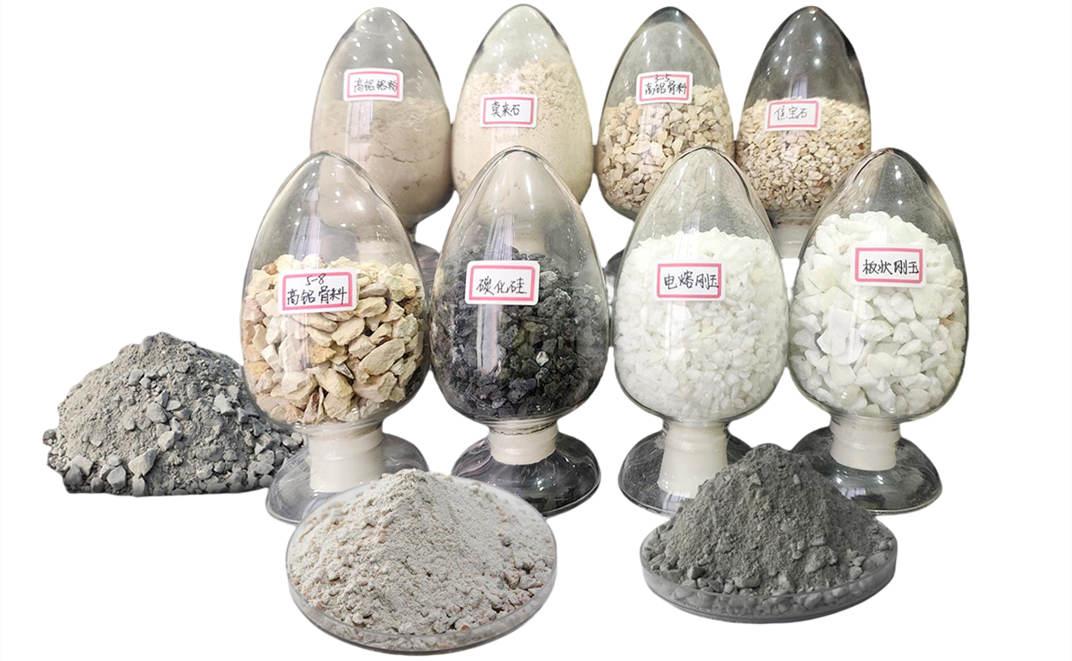
When considering refractory materials, alumina and mullite are historically dominant but have limitations in thermal management. Forsaking SiC powder's superior thermal conductivity can lead to inefficient heat transfer and shorter equipment lifespan in high-temperature zones.
Engineers working with metallurgical furnace linings have documented that SiC-based composites reduce heat accumulation by an estimated 20-30% during operation, directly lowering thermal stresses and extending service intervals. Similar improvements are recorded in ceramic kiln components and sintering furnace parts where thermal gradients remain more uniform.
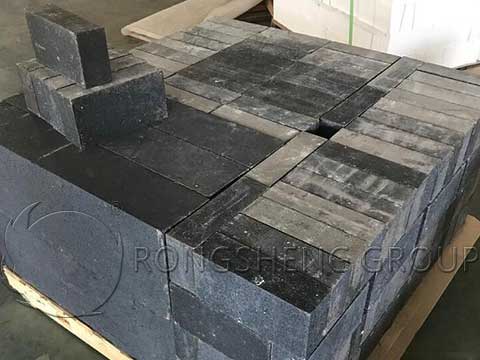
Feedback from industry specialists confirms that switching from alumina-based powder to high-purity SiC powders enhances temperature stability and operational reliability. Case studies reveal reductions in localized overheating failures and easier thermal management without compromising mechanical strength.
Reflecting on these findings, a critical question arises:
“Is your current refractory setup limiting your system’s lifetime due to insufficient heat conduction?”