Home > News > Enhancing Thermal Shock Resistance of Refractory Materials with High-Purity Silicon Carbide Powder: Mechanisms and Industrial Applications

Enhancing Thermal Shock Resistance of Refractory Materials with High-Purity Silicon Carbide Powder: Mechanisms and Industrial Applications

2026-02-10
This article explores how high-purity black silicon carbide (SiC) powder significantly improves the thermal shock resistance of refractory materials. By analyzing key physical properties such as hardness, thermal conductivity, and thermal expansion coefficient, it reveals the mechanisms behind structural stability under high-temperature conditions. Additionally, the impact of particle size control and processing techniques on sintering behavior and density optimization is discussed, providing industrial users with practical guidelines to extend refractory component lifespan and enhance kiln system efficiency. This comprehensive guide serves as a scientific reference for engineers and procurement specialists aiming to optimize refractory material performance with SiC additives.
Microstructure comparison showing dense vs porous refractory materials enhanced by SiC particle size control

Enhancing Refractory Materials’ Thermal Shock Resistance with High-Purity Silicon Carbide Powder

Silicon carbide (SiC) powder, especially in its high-purity black form, has emerged as a game-changing additive for refractory materials used in high-temperature industrial settings. Its unique physical properties—including superior hardness, excellent thermal conductivity, and low thermal expansion coefficient—enable refractory products to resist frequent temperature fluctuations and mechanical stress without structural degradation. This technical guide explores the critical role of high-purity SiC powders in improving thermal shock resistance, delving into particle size effects, sintering behavior, and practical manufacturing considerations relevant for materials engineers and procurement specialists alike.

1. Physical and Chemical Properties Underpinning Structural Stability

High-purity silicon carbide powder boasts exceptional properties vital for durability in refractory applications. With Mohs hardness around 9-9.5, SiC imparts enhanced mechanical strength. Thermal conductivity typically ranges between 100-120 W/m·K, markedly higher than most ceramics, facilitating efficient heat dissipation. Moreover, its thermal expansion coefficient (~4.0-4.5 × 10⁻⁶/°C) aligns closely with refractory matrices, reducing internal stresses upon rapid temperature changes. Together, these traits enable stable microstructures that maintain integrity over prolonged thermal cycling.

2. Mechanisms Driving Thermal Shock Resistance Improvement

The anti-thermal-shock performance enhancement of refractory materials incorporating SiC powder hinges on synergistic mechanisms:

  • Heat Dissipation Efficiency: High thermal conductivity of SiC enables rapid uniform heat distribution, minimizing localized thermal gradients.
  • Thermal Expansion Matching: SiC’s compatible expansion coefficient alleviates internal stresses that cause crack initiation and propagation.
  • Microstructural Reinforcement: Fine SiC particles act to bridge microcracks and reinforce grain boundaries, enhancing fracture toughness.

Enhanced microstructural uniformity and reduced porosity, driven by optimized SiC addition, are key to achieving these favorable effects under the demanding environments typical of kilns, furnaces, and incinerators.

3. Particle Size Effects on Sintering and Densification

Particle size distribution of SiC powder significantly influences refractory properties:

  • Fine Particles (submicron to a few microns): Promote higher packing density and stronger particle bonding during sintering, resulting in enhanced material density and mechanical strength.
  • Coarse Particles (10 microns and above): Aid in thermal shock resistance by providing crack deflection sites but may reduce densification if excessive.

A carefully engineered bimodal or multimodal size distribution often yields optimal results, balancing densification with toughening mechanisms. Typical SiC contents optimized for thermal shock resistance range from 10% to 30% by weight depending on refractory composition and operating conditions.
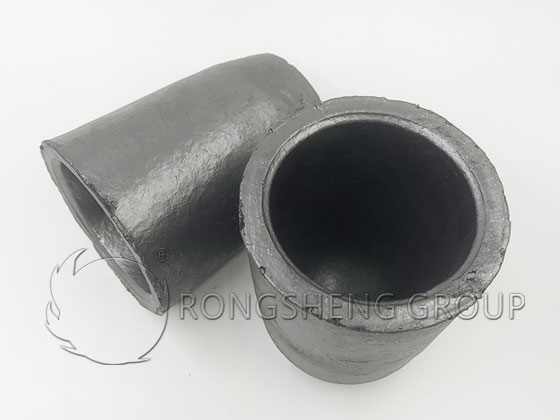
Microstructure comparison showing dense vs porous refractory materials enhanced by SiC particle size control

4. Critical Manufacturing Controls: Dispersion, Proportion, and Mixing

Translating SiC powder benefits into robust refractory products demands stringent control of processing parameters:

  • Homogeneous Dispersion: Uniform distribution of SiC particles prevents agglomeration that causes weak spots.
  • Optimal Addition Ratios: Excess SiC may hinder sintering or introduce thermal mismatch, so tailored addition between 10-30 wt% is standard.
  • Mixing Techniques: High-energy mixing or milling ensures fine grinding and dispersion, enhancing particle bonding and final densification.

Monitoring and adjusting these factors during fabrication improves reproducibility and performance consistency in industrial batch production.
Schematic diagram illustrating uniform mixing process of SiC powder with refractory matrix materials

5. Tailored Silicon Carbide Solutions for Diverse Industrial Requirements

Different operating environments impose varying demands on refractory materials—thermal cycling frequency, maximum temperature, chemical exposure, and mechanical loads differ across industries such as metallurgy, glass production, and cement manufacturing. To address this variability, customized SiC powder specifications are critical. Variables like purity level, particle size distribution, and morphological features can be adjusted to optimize performance indicators including:

  • Thermal shock resistance measured as cycles to failure under defined heat quenching tests
  • Mechanical strength evaluated by cold crushing strength (CCS), typically improved by 15-30% with optimized SiC additions
  • Service life extension in continuous kiln operation reaching an average of 20-30% improvement

Collaboration between material suppliers and end-users can facilitate specification tuning and pilot testing, ensuring refractory solutions fit the precise demands of each application.
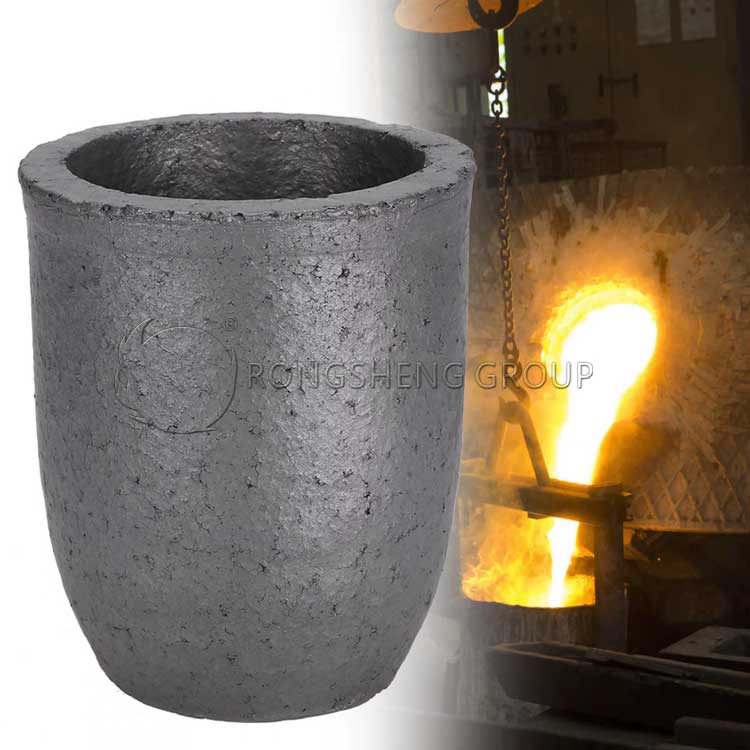
Industrial kiln operation demonstrating enhanced efficiency with SiC-enhanced refractory lining
“Implementing high-purity SiC powders has consistently enabled us to meet demanding thermal cycling requirements without compromising refractory lifetime — a critical factor in minimizing costly downtime.” – Industry Expert in Refractory Materials Engineering
Name *
Email *
Message*
Recommended Products