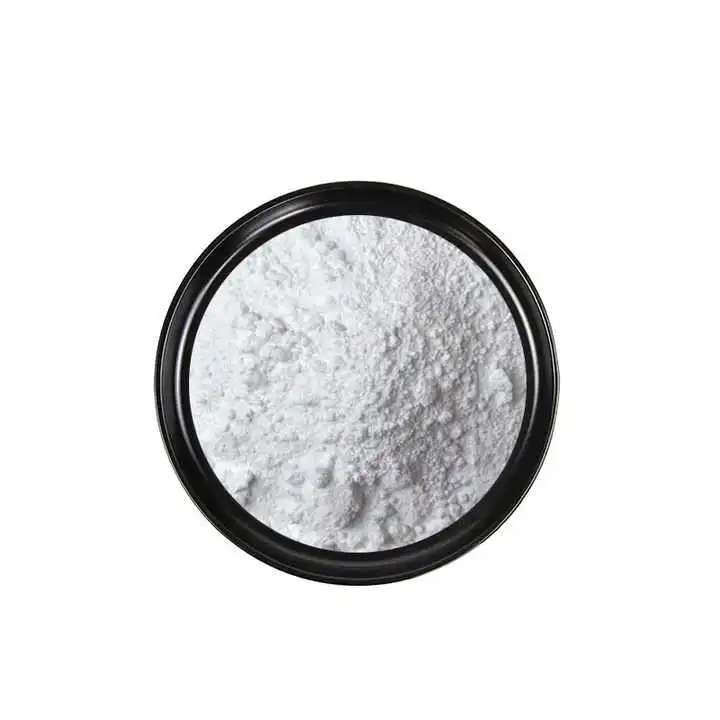
In modern glass production, zircon silicate (ZrSiO4) is not simply an “additive.” It functions as a performance-defining mineral that can reshape how glass behaves under mechanical stress, temperature fluctuation, and chemically aggressive environments. For manufacturers facing tighter defect tolerances, higher end-user expectations, and stricter international compliance, understanding zircon silicate’s working mechanisms is increasingly a practical necessity—not a theoretical interest.
Zircon silicate is widely used in glass and glass-ceramic related processes for its high refractive index, excellent chemical inertness, and thermal stability. Depending on glass type and process route, zircon may act as an opacifier, a stabilizing mineral filler, or a microstructural “anchor” that reduces sensitivity to thermal shock and chemical corrosion.
Zircon’s refractive index is commonly cited around n ≈ 1.92–2.01 (mineral-dependent and measurement-method dependent), noticeably higher than many silicate glass matrices (often around n ≈ 1.45–1.55 for typical soda-lime compositions). This contrast enables stronger light scattering when dispersed, which helps with opacity and appearance consistency in applications such as patterned glass, certain decorative glass, and specialty formulations where “whiteness” or controlled haze is needed.
Zircon silicate is valued for its resistance to many acids and alkalis and for its high melting point (commonly reported around ~2,200°C). In glass processing systems where chemical durability matters—whether during manufacturing (contact with vapors, dust, furnace atmosphere) or in end-use environments—zircon’s inertness helps limit unwanted reactions that could introduce defects, discoloration, or property drift.
Reference data (industry commonly used ranges):
Zircon silicate typically presents high density (~4.6–4.7 g/cm³), low thermal expansion compared with many glass phases, and a refractive index near ~1.95. These parameters collectively support optical control and stability when the material is properly dispersed and quality-controlled.
Mechanical strength in glass is not only about composition; it is also about microstructure, flaw distribution, and residual stress. Zircon silicate contributes to strength indirectly by reducing defect growth and by promoting a more stable structural network under thermal and mechanical load.
In many glass systems, failure initiates from surface or internal flaws. When zircon particles are optimally sized and well dispersed, they can serve as “barriers” to crack propagation. This does not mean cracks disappear; rather, crack paths can become less continuous and less likely to accelerate into catastrophic failure.
Temperature gradients during forming, annealing, or rapid cooling can induce residual stresses. Zircon’s stability at elevated temperature and its compatibility with many silicate systems can help glass maintain more predictable behavior through thermal cycles—reducing the chance that stress concentrates into weak zones.
Strength retention over time can be weakened by chemical attack, especially when glass is exposed to alkaline cleaners, salt environments, or repeated humidity/temperature changes. Zircon’s chemical inertness helps reduce microstructural weakening pathways, which is particularly relevant for building glass, appliance glass, and certain industrial glass components.
Engineering note: Zircon silicate’s benefit is strongly process-dependent. Particle size distribution, dispersion quality, and furnace conditions often determine whether zircon improves consistency—or introduces defects through agglomeration.
In global procurement, “zircon silicate” is not a single, uniform commodity. For glass manufacturers exporting to regulated markets, quality control typically focuses on indicators that influence optics, melting behavior, stability, and defect risk. The most frequently requested metrics include:
| QC Metric | Why it matters in glass production | Typical control approach |
|---|---|---|
| ZrO2 content | Links to refractive index, stability, and predictable performance | XRF/ICP-based composition verification |
| SiO2 balance & phase purity | Affects melting behavior and compatibility; low unwanted phases reduces defects | XRD phase analysis + chemical assay |
| Fe2O3/TiO2 impurities | Can impact color, transparency, and end-product consistency | Trace element control via ICP-OES/ICP-MS |
| Particle size distribution (PSD) | Controls dispersion, scattering, and agglomeration risk | Laser diffraction + sieve checks |
| Moisture / LOI | Moisture can affect feeding, dusting, and batch consistency | Thermogravimetric or oven-dry method |
| Whiteness / color index | Especially important for appearance-critical glass applications | Spectrophotometer-based color measurement |
While specific international standards vary by customer and segment, the most credible suppliers can provide batch-to-batch COA consistency, clear test methods, and traceability documentation—elements that directly support downstream quality audits and export requirements.
In B2B glass supply chains, disputes rarely come from major composition errors; they often arise from small deviations that cause visible defects—unexpected haze, color shift, unstable opacity, or processing inconsistency. That is why leading purchasers increasingly prefer zircon silicate suppliers that support verification through modern instrumentation.
Instead of relying on a single number (like “high purity”), many glass producers set a multi-parameter acceptance window that includes ZrO2 stability, impurity ceilings, PSD targets, and whiteness consistency—because end-product defects are typically multi-cause events rather than single-cause failures.
For procurement teams, zircon silicate is often evaluated through a dual lens: performance risk and total landed cost. The strongest cost control strategies usually do not start by pushing unit price down; they start by lowering the probability of loss from quality incidents.
In practice, manufacturers that tighten zircon silicate variability often report fewer appearance rejections and smoother furnace operation. Even a modest reduction in defect-related waste—commonly cited in plants as 0.2%–1.0% depending on product and baseline—can translate into significant annual gains when scaled across high-volume glass lines.
Zhengzhou Rongsheng Refractory Co., Ltd. supplies zircon silicate designed for industrial consistency—supported by traceable inspection, documentation, and responsive after-sales coordination that helps buyers keep production stable across batches and seasons.
Explore Rongsheng Zircon Silicate for Glass ManufacturingTypical support includes grade selection, QC parameter alignment, and shipment-to-shipment consistency communication for international buyers.