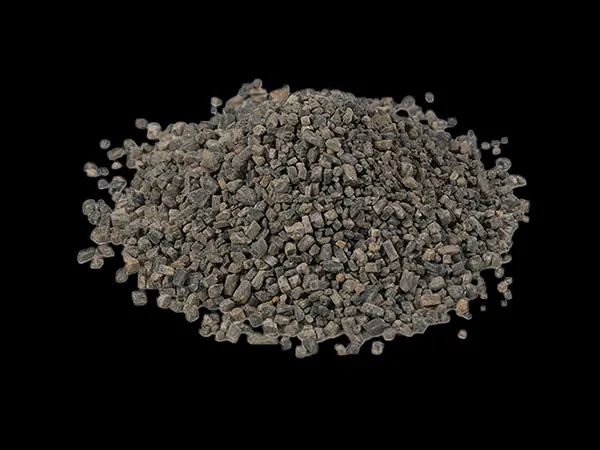
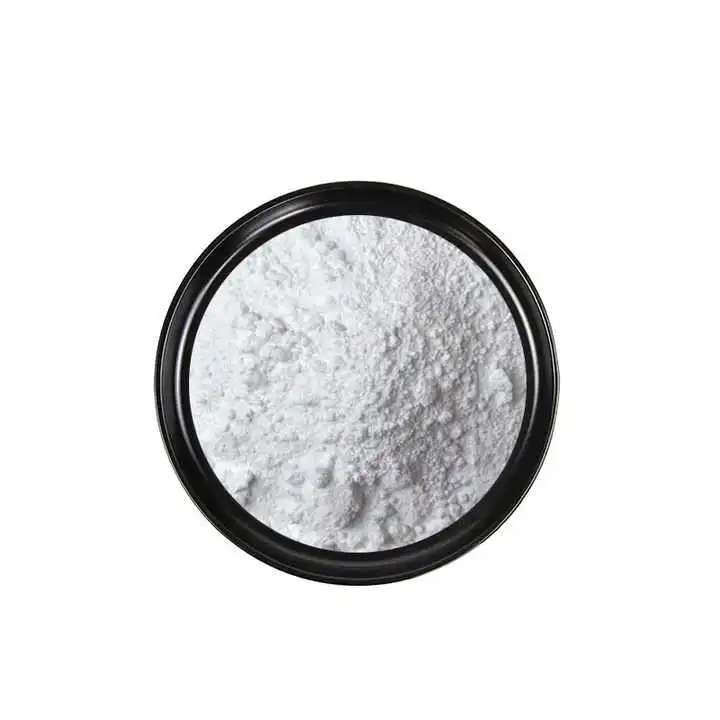
In high-temperature ceramic bodies and glazes, performance upgrades rarely come from “one big change.” They come from small, controllable variables—particle size, phase stability, wetting, and defect control. Zircon silicate (ZrSiO4) sits at the intersection of these variables, delivering optical whitening, chemical inertness, and microstructural reinforcement that many ceramic engineers can verify on the shop floor with measurable KPIs: lower defect rate, higher gloss retention, and more stable firing yield.
Zircon silicate is widely used as an opacifier and functional ceramic additive because its high refractive index (typically 1.93–2.01) and exceptional chemical stability persist under harsh kiln atmospheres. In practice, this means two things that matter in production: it enhances surface appearance without relying on fragile color systems, and it stabilizes performance when recipes face variable raw material quality, water chemistry, or firing drift.
In field terms: zircon silicate helps ceramics “forgive” small process fluctuations—especially in high-temperature bodies and glazes where viscosity, bubble release, and phase evolution can swing quickly within a narrow firing window.
Optical impact (high refractive index)
Strong light scattering improves whiteness, opacity, and perceived cleanliness of glazes and some bodies—often with better heat stability than alternatives.
Chemical stability (acid/alkali resistance)
Helps maintain color consistency and surface integrity in aggressive environments and during long or high-peak firing cycles.
Thermal robustness (high melting point)
Withstands typical ceramic peak temperatures (e.g., 1200–1300°C for many tile and sanitaryware processes) while supporting stable microstructure.
Particle engineering potential
Different grades (median size, distribution, purity) allow tuning of gloss, defect control, and dispersion to match specific process routes.

In glaze systems, zircon silicate works primarily through light scattering. When the refractive index contrast between dispersed zircon particles and the surrounding glassy matrix is high, incident light is scattered more strongly. The result is improved opacity, a “whiter” visual tone, and better masking of substrate color variations.
But the more practical benefit appears in defect management: well-dispersed zircon can help stabilize surface appearance by reducing sensitivity to minor changes in pigment dosage, flux balance, and firing curve. This tends to show up as fewer shade drifts between kiln zones and more consistent gloss across batches.
Beyond a certain loading, added zircon can increase slurry viscosity, reduce melt flow, and trap bubbles—hurting gloss and increasing pinholes. The “best” dosage is usually a balanced optimum tied to the glaze chemistry, firing temperature, and milling fineness.
High-temperature firing is rarely “clean.” Alkali-rich vapors, flux-driven corrosion, and redox swings can attack many additives and pigments. Zircon silicate remains comparatively inert in these environments, helping glazes and bodies resist chemical reactions that lead to unexpected color shifts, surface dulling, or micro-cracking.
Zircon silicate can be introduced into glaze slurries, engobes, and sometimes ceramic bodies (depending on product type). For many industrial tile and sanitaryware glaze systems, a typical working range is 5–15 wt% in the glaze recipe, while body additions (when used) are often lower and strongly dependent on sintering targets.
The key is not only dosage, but also particle size distribution and dispersion quality. Inconsistent dispersion can produce localized opacity islands, roughness, and bubble pinning. As a baseline for many operations, teams aim for stable slurry rheology and repeatable milling fineness (often monitored by residue on sieve and/or laser particle size checks).
| Zircon (wt% in glaze) | Whiteness index (CIE WI) | 60° gloss (GU) | Apparent porosity (%) | Flexural strength (MPa) |
|---|---|---|---|---|
| 0% | 72 | 88 | 0.45 | 46 |
| 5% | 78 | 91 | 0.38 | 49 |
| 8% | 83 | 93 | 0.33 | 52 |
| 12% | 86 | 92 | 0.31 | 53 |
| 15% | 87 | 89 | 0.34 | 51 |
Interpreting the trend: whiteness typically rises quickly at moderate addition, while gloss may peak and then flatten or drop when viscosity and bubble retention increase. Many plants treat the 8–12% range as a starting point for optimization, then tune by kiln curve and milling fineness.
Whiteness / Opacity: rises sharply from low addition → approaches plateau around mid-range loading.
Gloss: improves with better scattering and surface uniformity → can dip if melt flow is restricted or bubbles/pinholes increase.
Defect rate: often decreases when dispersion is controlled → rises again if overloading causes rheology or degassing issues.
For R&D and process engineers, the fastest way to make zircon silicate “behave” is to treat it as a system variable, not a plug-in powder. A practical approach is a staged validation that keeps cost and time under control while producing data the plant can trust.
In many production cases, teams report that the biggest jump in outcomes comes not from pushing zircon dosage to the maximum, but from ensuring stable dispersion and matching it with a firing curve that allows gases to escape before the glaze seals. When that alignment is achieved, improvements often show up as a measurable reduction in surface defects (for example, pinholes dropping from roughly 6–8/dm² to 2–3/dm² in a controlled trial), plus tighter shade control.
International ceramic manufacturers typically evaluate zircon silicate suppliers on repeatability as much as headline specs. That includes lot-to-lot stability, impurity control, and the ability to provide documentation that fits procurement workflows—COA formats, traceability, and compliance-related paperwork for different markets.
In this context, Rongsheng zircon silicate is positioned as a practical engineering material: supported by international-style certifications, consistent quality control, and after-sales technical coordination that helps teams move from lab validation to production locking without losing time to rework.
Share your firing temperature, glaze type, and current defect pain points. Get a practical dosage range, milling target suggestions, and a validation checklist tailored around Rongsheng zircon silicate—plus the option to request trial material for faster internal testing.