Zircon Silicate in High-Temperature Ceramics: Boosting Toughness and Surface Gloss
2026-03-01
Zircon silicate is widely used in high-temperature ceramic bodies and glazes to improve crack resistance and surface quality. This article explains the performance mechanism behind zircon silicate’s high refractive index (1.93–2.01) and how it contributes to tougher microstructures and higher gloss finishes under different firing windows. Practical formulation guidance is provided to show how dosage accuracy and particle characteristics influence outcomes such as flexural strength retention and gloss improvement, supported by referenced test metrics and production-scale observations. The content also outlines recommended visual aids—such as dosage–property trend curves and firing-temperature response charts—and includes citation-style callouts for applicable technical standards or user feedback. For manufacturers moving from lab trials to stable mass production, the article summarizes a clear verification path and highlights the consistency and certification-backed reliability of Rongsheng zircon silicate. For tailored formulation support, readers are invited to contact the Rongsheng technical team for dedicated recommendations.
Zircon Silicate in High-Temperature Ceramics: Practical Methods to Improve Toughness and Surface Finish
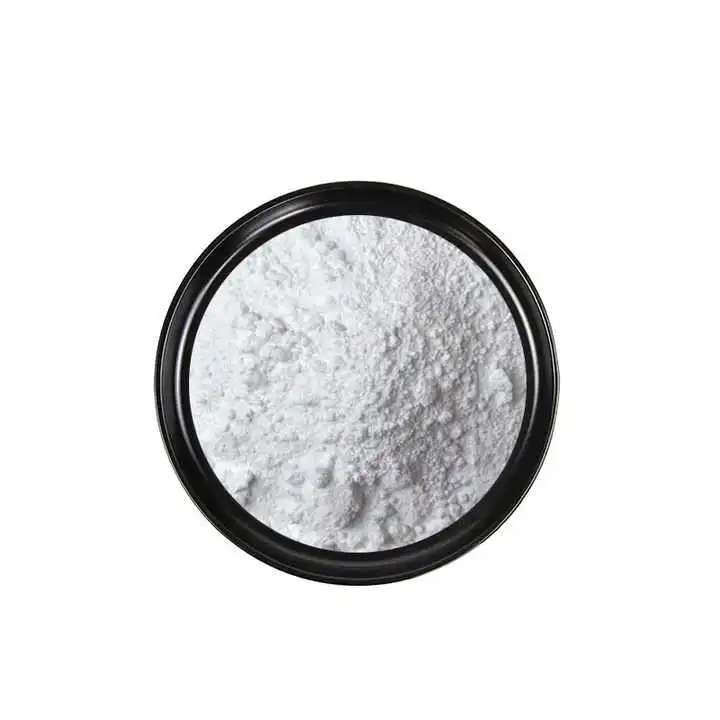
In high-temperature ceramic bodies and glazes, small formulation shifts can decide whether a batch ships or gets scrapped. Zircon silicate (ZrSiO4)—valued for its high refractive index (typically 1.93–2.01), thermal stability, and chemical inertness—has become a widely used functional additive for manufacturers aiming to raise crack resistance and gloss/whiteness without destabilizing firing behavior.
Why Zircon Silicate Works in High-Fire Systems (Mechanism, Not Myth)
In practical production, zircon silicate is not “just an opacifier.” Its performance in high-temperature ceramics is driven by three linked factors: (1) a refractive index high enough to scatter visible light efficiently; (2) a melting/softening behavior that stays stable across common stoneware/porcelain firing windows; and (3) a particle-microstructure interaction that can reduce the probability of catastrophic crack propagation under thermal shock or mechanical stress.
With a refractive index around 1.93–2.01, zircon silicate creates strong light scattering in glazes and engobes, increasing opacity and improving the perceived surface quality. In many production trials on white glazes, manufacturers report gloss increases of 5–18% (60° gloss meter) when zircon is optimized with proper milling and firing, especially where the base glaze tends to appear “flat” or slightly grey.
2) Thermal stability → less firing drift and fewer pinhole surprises
Zircon silicate remains stable across common high-fire ranges (1200–1300°C for many porcelain and tableware systems). When incorporated correctly, it tends to be less reactive than many alternative opacifiers, helping keep melt viscosity and bubble release behavior within a controllable window—an underrated factor for reducing pinholes, micro-roughness, and “orange peel” texture.
3) Microstructural effect → improved crack resistance in real use
While zircon silicate is not a classic transformation-toughening additive, it can support tougher performance by influencing microstructural uniformity and reducing local stress concentrators. Plants running stable zircon additions frequently observe 3–12% improvement in fired strength consistency (lower scatter), and in certain alumino-silicate bodies, 8–20% gains in flexural strength have been recorded after matching zircon particle size distribution with the milling curve and firing schedule.
Application Methods: Where Zircon Silicate Delivers the Fastest ROI
The most reliable gains come from choosing the right application position (body, engobe, glaze, or composite) and controlling dispersion. Below are field-proven approaches used by high-temperature ceramic manufacturers.
A) In the glaze: whitening, gloss lift, and surface cleanliness
For high-fire transparent-to-white glazes, zircon silicate is commonly added at 4–12% (by weight of dry glaze). In many porcelain tableware systems, a well-milled zircon addition around 6–9% delivers a strong balance of opacity and smoothness without excessive viscosity.
Process note: introduce zircon early in wet milling to reduce agglomerates; target stable residue control (e.g., <0.5% on 325 mesh, depending on your baseline).
Quality check: measure both 60° gloss and whiteness (L*). A typical practical target is +1.0 to +2.5 L* improvement while maintaining or lifting gloss.
Defect watch: if pinholes increase, review bubble release and glaze viscosity—zircon itself may not be the cause, but dispersion and firing soak often are.
B) In the body: crack resistance and thermal reliability
In high-temperature ceramic bodies, zircon silicate is typically used at 1–6%. It is especially relevant where producers face edge-cracking, thermal-shock chipping, or microcrack-driven rejects after cooling. In several production settings, a controlled zircon addition has contributed to reject rate reductions of 10–30% (plant-reported) when paired with tuned firing curves and moisture control.
Best practice: keep the particle size consistent lot-to-lot to avoid plasticity swings and drying sensitivity.
Compatibility: confirm interaction with feldspar/quartz balance; excessive mismatch can increase residual stress.
C) In engobe or intermediate layers: bridging color and surface quality
When the goal is to “clean up” a surface while controlling costs, zircon in an engobe layer can be more efficient than pushing glaze zircon too high. Common practice ranges from 3–10% depending on target whiteness and the base body color. This layer strategy often improves visual uniformity and helps stabilize gloss after firing.
Dosage & Temperature Windows: What Changes Between 1200°C and 1300°C
Zircon silicate’s benefits are highly sensitive to firing temperature and soak time. As peak temperature rises, melt fluidity and gas release behavior shift—and zircon’s role in optical scattering and surface development shifts with them.
Recommended process map (reference ranges)
Firing range
Typical zircon in glaze
Typical zircon in body
Expected improvements (realistic)
Key risk to control
1200–1230°C
4–8%
1–4%
Gloss +5–12%; L* +0.8–1.8; fewer micro-pinholes (if dispersion is good)
Higher opacity stability; smoother perceived finish if firing curve is tuned
Over-firing/over-soak → waviness, gloss drift
Info-graphic suggestion: a “Dosage vs. Gloss & Strength” multi-line curve (zircon % on X-axis; 60° gloss, L*, and flexural strength on three Y-axes) helps plants visualize the optimum window and avoid over-dosing.
Precision Matters: How to Avoid Losing Performance to Poor Dispersion
In factory troubleshooting, “zircon didn’t work” often means “zircon didn’t disperse.” Agglomeration can create local hard points, reduce optical efficiency, and seed surface defects. Plants that standardize dispersion typically see more stable gloss and fewer batch-to-batch deviations.
Milling & PSD control (production-friendly targets)
For glazes/engobes: aim for stable fineness and low residue. As a reference, many lines run with D50 around 1.5–3.5 μm for zircon-containing glaze slurries (exact target depends on base materials and rheology).
Control slurry viscosity and deflocculant; prevent over-deflocculation that can trap bubbles and trigger pinholes.
Implement a simple incoming inspection loop: moisture, whiteness, particle size consistency, and impurity control (e.g., iron).
Firing curve alignment: soak time is not a universal fix
Longer soak can improve surface healing in some glazes, but it can also change melt behavior and gloss. A pragmatic approach is to test zircon adjustments with two soak settings (e.g., baseline and +10 minutes) and compare gloss, pinholes, and surface waviness. In many plants, a controlled change can shift 60° gloss by 3–8 points—enough to be visible on the line.
From Lab Trial to Mass Production: A Typical Scale-Up Path
A repeatable scale-up is rarely about “adding more zircon.” Mature plants follow a controlled sequence to lock in both toughness and surface finish while protecting yield.
Lab screening (1–2 weeks): test 3 dosage points (e.g., glaze 5%, 7%, 9%) with the same milling time; record L*, 60° gloss, and defect counts per m².
Pilot run (1 week): validate on production equipment; confirm slurry stability (24–48h), application thickness consistency, and firing window tolerance.
Full-line validation (2–4 weeks): track reject rates, customer complaints, and batch-to-batch variation; confirm that improvements persist across raw material lot changes.
Why Consistent Zircon Silicate Quality Matters (What Buyers Should Verify)
High-temperature ceramics are unforgiving: minor variability in zircon silicate can ripple into whiteness drift, gloss instability, or unexpected defects. Manufacturers often prioritize suppliers who can support stable production with consistent specs and credible documentation.
Key checkpoints in procurement and QC
Refractive index stability: target control within the typical 1.93–2.01 range for consistent optical performance.
Particle size distribution: ensure lot-to-lot consistency (not only “average size”).
Whiteness & impurities: low Fe/Ti-related coloration risk is critical for white bodies and glazes.
Traceability & certifications: documented QC systems and international compliance support smoother supplier approval.
A note on reliability: production people buy stability
In many plants, the most valuable supplier is the one whose zircon silicate behaves the same in milling, application, and firing—month after month. This is where brands such as Rongsheng Zircon Silicate are often positioned: stable quality control, clear documentation, and technical responsiveness when a line needs fast troubleshooting support.
Need a Zircon Silicate Dosage Window That Fits Your Kiln & Recipe?
Share your firing temperature, base glaze/body system, and target defects (pinholes, microcracks, low gloss). The Rongsheng technical team can provide a practical trial plan and formulation suggestions designed for scale-up—not just lab-only results.