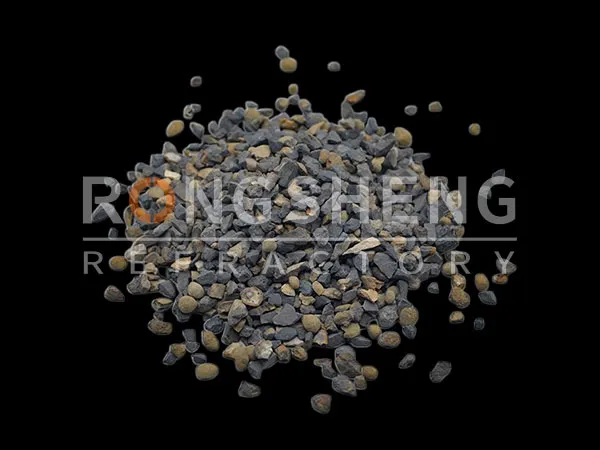
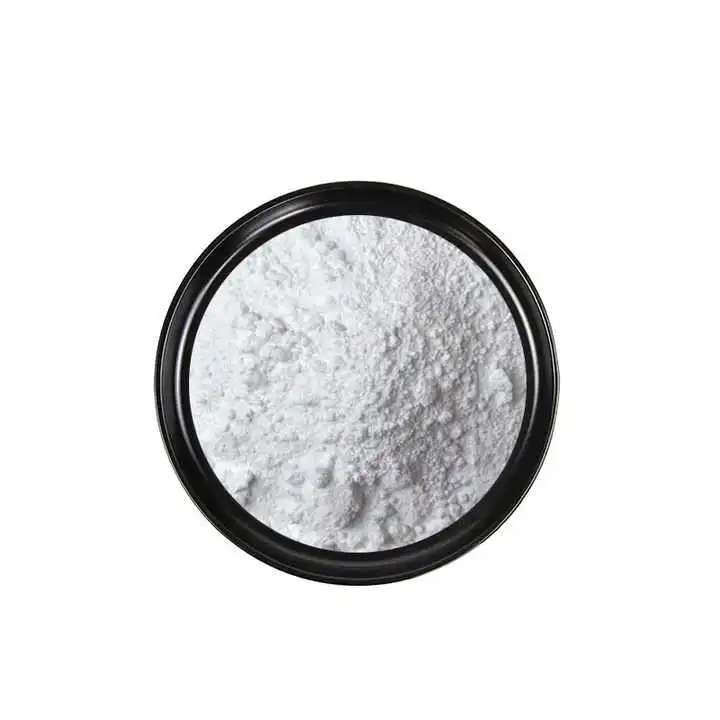
In high-temperature ceramic production, zircon silicate (ZrSiO4) is often treated as “just another opacifier.” In practice, its high refractive index (typically 1.93–2.01) and thermal-chemical stability make it a precise tool for shaping density, crack resistance, and glaze smoothness—if the dosing logic fits the body and firing window.
The following method-focused guide explains what changes when zircon silicate is added, how to choose workable ratios by application, and how to translate lab results into stable mass production.
Zircon silicate contributes to performance through three core mechanisms: optical scattering, thermal stability at firing temperatures, and microstructural control. Compared with many whitening agents, it stays chemically stable in common ceramic and glaze chemistries and maintains its function during firing cycles used for daily-use porcelain and industrial ceramics.
Reference property window (typical industry ranges):
• Refractive index: 1.93–2.01 (enables strong light scattering for opacity and bright finish)
• Mohs hardness: ~7.5 (supports abrasion resistance in wear-prone surfaces)
• Thermal expansion (20–1000°C): ~4.0–4.5 ×10⁻⁶/K (helps reduce thermal mismatch vs many glaze systems)
• Decomposition: stable under typical ceramic firing; zircon begins dissociation only at very high temperatures (generally above ~1550°C, depending on atmosphere and chemistry)
For engineers, the key takeaway is not only “whiter glaze.” Zircon silicate can help control microcrack tendency (by moderating thermal expansion mismatch), and improve surface uniformity (by stabilizing the glaze structure and reducing visible defects when milling and dispersion are controlled).
In real production, zircon silicate is not a single “magic number” addition. Its effective dosage depends on whether it is used in the body, the glaze, or both—and whether the firing is fast, conventional, or high-temperature soak. The practical goal is to reach a stable balance: enough zircon to deliver optical and structural benefits, but not so much that it hurts sintering dynamics or increases viscosity to the point of glaze defects.
Adding zircon silicate to the body can help reduce defect-driven failures by improving microstructural stability and reducing the severity of thermal stress, especially in components that see temperature gradients. However, excessive addition can make densification harder if particle size is coarse or dispersion is poor.
Practical body dosage (starting point, adjust by clay/feldspar system):
In glaze, zircon silicate acts as a strong light-scattering phase and can also support a more uniform, premium-looking surface when properly milled. The trade-off is that zircon can increase glaze viscosity and alter melt behavior—so the best results come from pairing dosage with milling fineness and a stable firing curve.
Practical glaze dosage (common industrial range):
Tip: Most “gloss loss” complaints are not caused by zircon itself, but by agglomeration, insufficient milling time, or unstable peak-temperature holding.
A high-gloss surface can still fail in the market if the glaze crazes after thermal cycling. Zircon silicate helps by moderating mismatch, but it cannot compensate for a fundamentally incompatible body–glaze system. When both layers use zircon, the system often becomes easier to stabilize—especially in high-temperature porcelain where peak temperatures and cooling gradients amplify stress.
Experimental reference (pilot scale, porcelain glaze system):
• Baseline zircon in glaze: 3% → Optimized zircon: 7%
• Milling fineness improved from D90 ≈ 18 μm to D90 ≈ 10 μm
• Peak firing: 1280°C with controlled cooling (industrial roller kiln profile)
Observed improvements (typical ranges):
Note: The range depends strongly on raw material purity, iron contamination control, and kiln atmosphere.
Question for your team: Are you fighting “random” glaze defects that appear only on some batches—or only after you speed up the kiln? That pattern is often a sign of dispersion variability rather than a fundamental formula error.
For tableware manufacturers, zircon silicate is most valuable when it delivers repeatable aesthetics: a clean white tone, consistent opacity, and a smooth surface that feels premium. Here, the success factors are often operational—tight control of milling, slip viscosity, and contamination—rather than simply increasing zircon content.
Info-graphic suggestion: “Zircon dosage vs. gloss/opacity curve” with two lines: (1) adequate dispersion, (2) poor dispersion. This visual makes it clear why higher dosage may plateau or even reduce surface quality when agglomeration occurs.
In industrial ceramics, the focus shifts to thermal cycling, chemical exposure, and dimensional stability. Zircon silicate is frequently selected for its stability and hardness, supporting wear resistance and reducing the risk of stress-driven failure in demanding service environments. Formulators typically validate performance using internal thermal shock tests and microstructure checks, then lock down process control limits to keep variability low.
Many plants find that zircon silicate delivers excellent lab results, but mass production fluctuates. The gap typically comes from operational details that change the effective particle distribution and melt behavior.
Aim for stable milling fineness and verify with a simple particle-size check (e.g., D90 ≤ 10–12 μm for many glazes). Agglomerates can cause local opacity spikes, roughness, and pinholes.
Faster kilns increase sensitivity. If you raise zircon to push opacity, compensate by adjusting peak hold or cooling control to protect gloss and reduce trapped gases.
Even small contamination (iron-bearing dust, unstable recycled water) can ruin whiteness perception. Zircon helps, but cannot fully “hide” poor housekeeping and inconsistent raw material purity.
Another practical question: Does your whiteness vary more by shift than by formula? If yes, the biggest win is often standardizing milling time, slurry density, and screen/filtration discipline before changing the recipe again.
In high-temperature ceramics, a “good additive” is only useful if it is consistent across batches. Rongsheng zircon silicate is positioned for manufacturers who need predictable results in opacity, surface finish, and firing stability. With internationally recognized quality certifications and strong batch-to-batch consistency control, Rongsheng zircon silicate has become a preferred raw material for many top-tier ceramic enterprises.
Share your current body/glaze recipe range and firing curve. The Rongsheng team can suggest a workable zircon silicate ratio window and QC checkpoints tailored to your production line.
Request Rongsheng Zircon Silicate Technical Guidance & SamplesTypical response includes recommended dosage bands, milling fineness targets, and a simple defect-troubleshooting checklist for your plant.