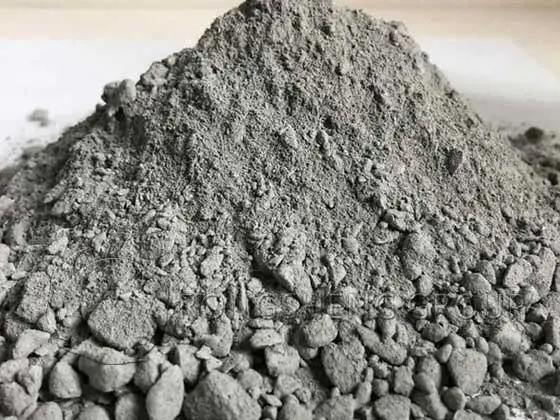
Industrial Guide to Selecting and Applying Silicon Carbide Powder in Refractory Materials | Rongsheng Refractory This technical guide explores the critical role of high-purity silicon carbide (SiC) powder in enhancing refractory material performance. With exceptional hardness, thermal stability, and oxidation resistance—backed by CE and ISO certifications—SiC powder significantly improves anti-spalling capability and structural integrity under extreme heat conditions. The article analyzes how particle size distribution and purity directly influence sintering behavior, density, and service life, supported by real-world industrial case studies. It offers practical selection criteria for manufacturers seeking optimized formulations tailored to diverse high-temperature applications, emphasizing the importance of customization to meet varying process demands. Rongsheng Refractory’s 20+ years of expertise in producing SiC powders with 80–95% purity underscores its commitment to reliable, application-specific solutions for global refractory industries. Learn More 2026/03/14
Enhancing Refractory Performance with High-Purity Silicon Carbide Powder | Rongsheng Refractories This technical guide explores how high-purity silicon carbide (SiC) powder significantly improves the structural stability and thermal shock resistance of refractory materials. By analyzing key properties such as hardness, thermal conductivity, and coefficient of thermal expansion, this article demonstrates the role of SiC in enhancing refractory performance under extreme conditions. It also examines particle size distribution effects on densification and sintering behavior, along with process parameters like dispersion and addition ratio—critical for optimizing product quality. Supported by data from industrial applications, including case studies showing improved service life in kiln linings, the guide offers actionable insights for engineers and manufacturers seeking to tailor refractory solutions. Customizable SiC powders are recommended for diverse operating environments, ensuring long-term durability and efficiency. Learn More 2026/03/14
Fused White Alumina Grit Size Selection for High-Temperature Refractories | Rongsheng Refractory Materials Choosing the right fused white alumina particle size distribution is a key lever for improving both installation efficiency and lining durability in high-temperature refractory systems. This article explains a practical grading strategy from ultrafine powders to coarse aggregates, showing how each fraction influences flowability, packing density, permeability, and resistance to slag/chemical attack. It also compares spherical versus irregular fused white alumina in ramming mixes, low-cement castables, and precast blocks, highlighting their different behaviors in compaction, water demand, and crack propagation under thermal shock. Customer test results from Europe and North America are referenced to illustrate measurable differences in density, flow, and spalling resistance between particle morphologies. For demanding units such as steel EAF linings and FCC reactor components, the selection logic is linked to temperature gradients and thermal-stress distribution, helping engineers match PSD and shape to real operating profiles. As a solution partner, Rongsheng Refractory Materials supports global customized grit sizing programs and provides ISO9001-certified quality control, including ultra-pure options (Al₂O₃ ≥ 99.5%) for critical applications. Learn More 2026/03/10
Rongsheng Refractory | Global Standards for Fused White Alumina Purity (Al2O3 ≥99.5%, Na2O ≤0.30%) & Lining Life Extension This technical article explains how fused white alumina (WFA) purity control under major global standards supports longer service life in steelmaking furnace linings. With an emphasis on the widely adopted targets of Al2O3 ≥99.5% and Na2O ≤0.30%, it interprets typical international compliance logic (ASTM/ISO-style requirements) and links chemical composition to performance outcomes such as high-temperature stability (≥1850°C), reduced slag/metal infiltration, and improved corrosion resistance. The article also compares XRF and ICP-MS for incoming inspection—highlighting practical accuracy, detection limits, and best-fit scenarios—so refractory engineers can select an efficient, auditable testing route. Mechanistically, it clarifies how alkali impurities (especially Na2O) disrupt dense microstructures and lower hardness, building a clear “purity → properties → lining life” chain. A representative steel plant case is included, showing a 30%+ lining life increase after switching to ultra-pure WFA, helping customers improve equipment lifespan and operating efficiency. Finally, an actionable incoming-inspection SOP template and impurity-source checklist are provided to help teams control quality at the source. Rongsheng Refractory positions WFA as an internationally trusted, high-quality refractory raw material foundation for high-temperature kiln and furnace applications. Learn More 2026/03/08
ASTM & ISO Fused White Alumina Purity Control (≥99.5% Al2O3, Na2O ≤0.30%) | Rongsheng Refractory This article interprets the key global specifications (ASTM and ISO) governing fused white alumina for refractory applications, with a focus on controlling Al2O3 purity at ≥99.5% and limiting Na2O to ≤0.30%. It compares the suitability of XRF and ICP‑MS for chemical verification—covering working principles, accuracy, detection limits, and best-fit use cases for incoming inspection and process control. The performance mechanisms of high-purity alumina are then explained, linking reduced alkali/trace impurities to improved thermal stability, denser microstructure, and enhanced Mohs hardness, which together support longer refractory service life. A steelmaking lining case is presented to illustrate how ultra‑pure fused white alumina can measurably improve lining durability and operational stability. The article concludes with a practical quality-control workflow (SOP checkpoints, typical impurity sources, and process optimization measures) to help engineers and technical managers build robust, standard-aligned testing strategies. High‑purity fused white alumina supports equipment life extension and operating efficiency optimization, and Zhengzhou Rongsheng Refractory provides professional customized solutions to ensure globally trusted quality. Learn More 2026/03/07
International Standards for Fused White Alumina Purity Control & Refractory Performance | Rongsheng Refractory Materials This industry-focused review explains how leading global standards (including ASTM and ISO frameworks) guide chemical purity control for fused white alumina, with emphasis on the critical thresholds of Al2O3 ≥99.5% and Na2O ≤0.30%. It links composition to refractory behavior by detailing how low alkali and high alumina levels support dense microstructure formation, thermal stability, and resistance to slag and chemical attack in demanding service. The article compares modern analytical routes—XRF for fast, routine plant control and ICP-MS for ultra-trace impurity verification—highlighting typical use scenarios, accuracy considerations, and quality assurance workflows. Practical case insights from high-temperature linings in steelmaking and power boiler applications demonstrate measurable durability and operational efficiency benefits when high-purity fused white alumina is consistently achieved. As a result, refractory engineers and technical managers can build an actionable “purity → performance → lining life” control strategy while leveraging Rongsheng Refractory Materials for reliable, application-tailored supply and technical support. Learn More 2026/03/06