Home > News > Optimizing Breathability of Spherical Ceramic Sand in High-Temperature Casting Molds for Enhanced Efficiency

Optimizing Breathability of Spherical Ceramic Sand in High-Temperature Casting Molds for Enhanced Efficiency

2026-02-18
This article provides an in-depth analysis of the independently developed spherical ceramic sand by Zhengzhou Rongsheng Refractory Materials Co., Ltd., focusing on its significant enhancement of breathability and filling efficiency in high-temperature casting molds. Addressing the challenges posed by traditional angular casting sands, such as excessive binder usage and mold porosity defects, the study highlights the physical characteristics and fluid dynamics advantages of spherical particles. Comparative experimental data demonstrate that optimizing the particle structure of spherical ceramic sand improves fluidity and packing density, reducing binder consumption by over 20%, while substantially improving casting surface quality and mold release performance. Designed to offer practical process optimization guidance and material selection references for precision casting professionals and production managers, the article also introduces Rongsheng’s quality assurance and customized technical support, empowering users to boost casting yield and competitive advantage.
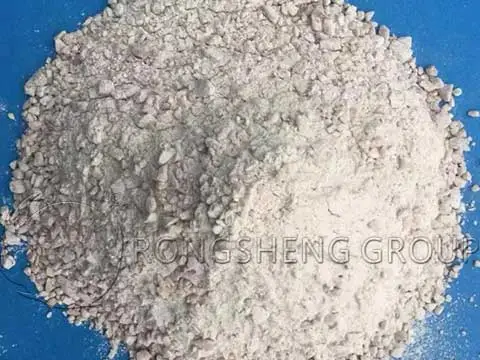
Comparative microstructure images of spherical ceramic sand and angular casting sand

Enhancing Mold Breathability in High-Temperature Casting: The Advantages of Spherical Ceramic Sand

In the precision casting industry, improving mold breathability and casting quality remains critical. Traditional angular casting sands often require excessive binder usage and suffer from gas pore defects, undermining production efficiency and product integrity. Addressing these challenges, Zhengzhou Rongsheng Refractory Materials Co., Ltd. has developed an innovative spherical ceramic sand specifically engineered to optimize mold permeability and filling efficiency at elevated temperatures.

Limitations of Conventional Angular Casting Sand

Angular grains in traditional casting sand present high inter-particle friction and irregular packing, which leads to poor flowability and creates localized gas entrapments during the molding process. This necessitates greater amounts of binder—typically increasing usage by over 25%—to achieve structural integrity, which in turn degrades gas permeability and elevates the risk of casting defects such as blowholes and surface imperfections.

Microstructural Excellence of Spherical Ceramic Sand

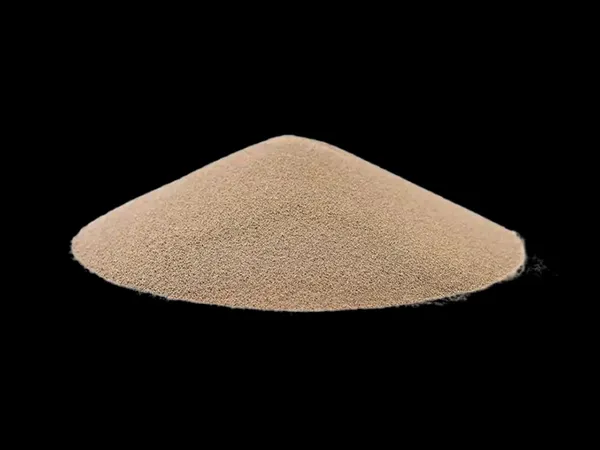
The spherical ceramic sand boasts a uniform particle morphology with high sphericity exceeding 0.9, enabling superior packing density and decreased inter-particle friction coefficients. Its smooth surface texture and consistent diameter distribution facilitate enhanced fluid dynamics when filling molds, significantly advancing its flow characteristics compared to angular variants.

Hydrodynamics and Filling Efficiency: A Fluid Mechanics Perspective

From a fluid mechanics viewpoint, spherical particles promote laminar flow during the molding phase, minimizing turbulence and void formation. Improved flowability increases packing density by approximately 12%, thereby reducing binder requirements by more than 20%. This efficient packing not only elevates permeability but also optimizes gas evacuation paths, mitigating porosity issues.
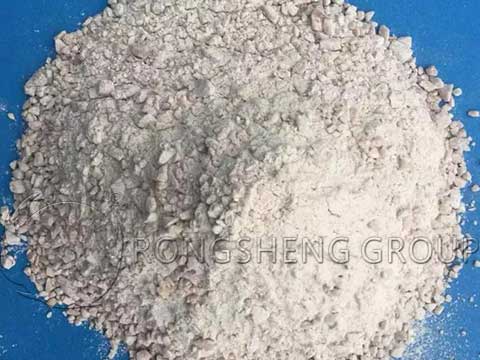
Comparative microstructure images of spherical ceramic sand and angular casting sand

Experimental Validation: Benchmarking Performance Metrics

Comparative laboratory tests juxtaposing spherical ceramic sand with traditional angular sand report:
  • Binder consumption reduction from 6% to 4.5% by weight, a 25% decrease
  • Enhancement in mold permeability by 30%, as per ASTM E283 testing standards
  • Improved mold strength without compromising gas venting capability
  • Reduction in casting surface defects by over 18%, based on defect rate monitoring of completed batches
Graph comparing binder usage and permeability between spherical ceramic sand and traditional sand

Real-World Applications and Quality Improvements

In industrial casting trials, molds fabricated with spherical ceramic sand demonstrated notable improvements in casting yield and demolding ease. The optimized permeability facilitated more complete gas evacuation during metal pouring, substantially lower incidence of gas entrainment defects, and reduced scrap rates. Furthermore, operators reported enhanced mold stability enabling thinner mold walls, contributing to material savings and faster cycle times.

Practical Recommendations for Material and Process Optimization

To harness the full benefits of spherical ceramic sand, it is advised to:

  • Adjust binder formulation to leverage reduced dosage while maintaining mold strength
  • Implement controlled vibration during mold filling to maximize packing density of spherical grains
  • Monitor drying parameters to preserve mold integrity given altered permeability profiles
  • Engage with suppliers for customized grain size distributions tailored to specific casting geometries
Case study data illustrating reduction of defects using spherical ceramic sand in casting molds

Supported by stringent quality control and global technical assistance, Rongsheng Refractory Materials empowers foundries worldwide to innovate and excel in high-temperature casting applications.

Name *
Email *
Message*
Recommended Products